Junior Researchers’ Workshop for the Academic Staff of the DFG Research Unit “Antiziganism and Ambivalence in Europe (1850–1950)"
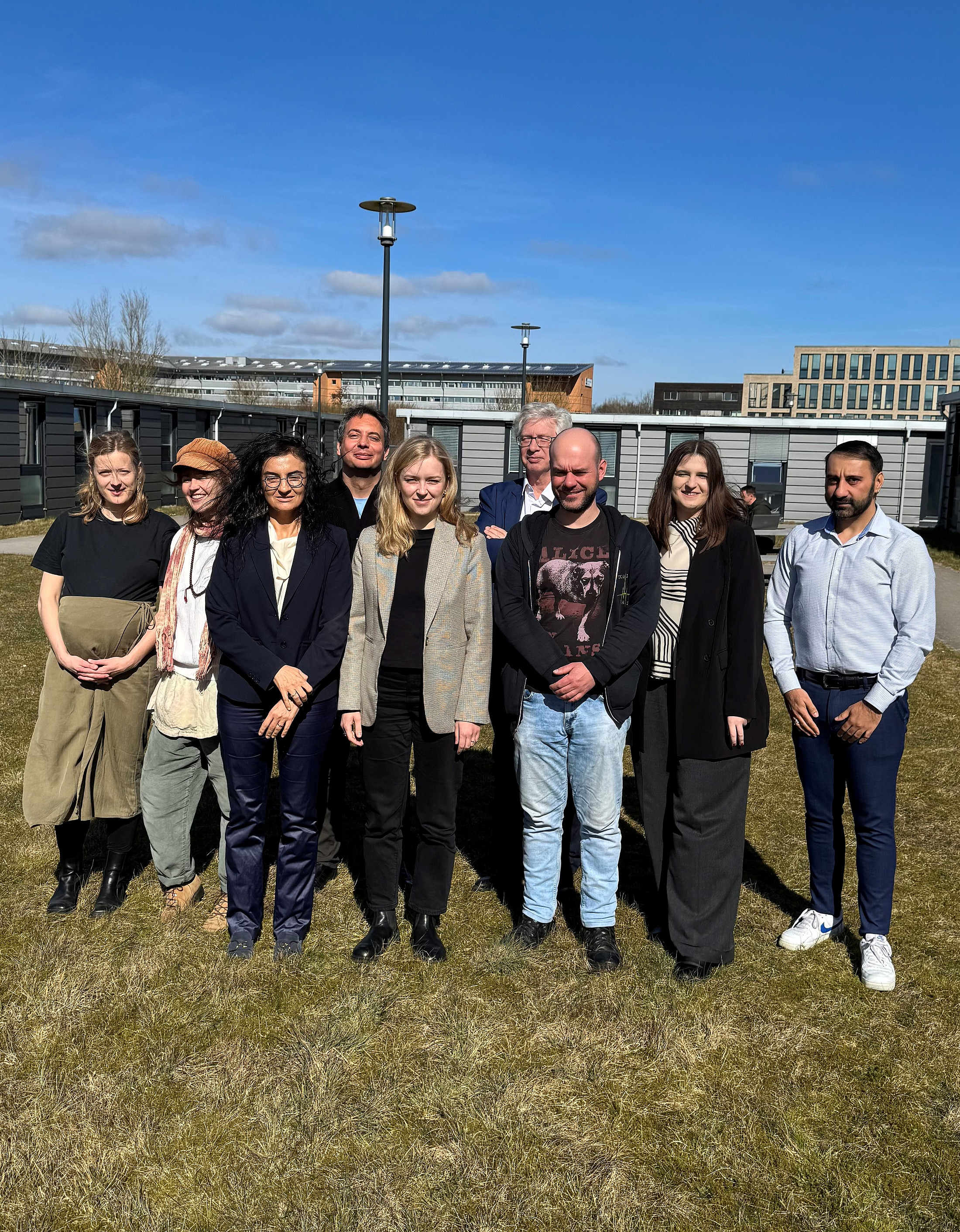
26.03.2025, at Europa-Universität Flensburg (EUF)
As the opening event of the DFG Research Unit, the first workshop for early-career researchers took place on March 26, 2026. Nine early-career researchers are involved in the four-year project, conducting their work at Heidelberg University, Justus Liebig University Giessen, Philipps University Marburg, and Europa-Universität Flensburg. Their research focuses on two main objectives: first, examining and critically reflecting on forms of exclusion, prejudice, and stereotypes that prevailed between 1850 and 1950; and second, investigating how Sinti and Roma developed and exercised their own forms of agency during this period.
The workshop included presentations and discussions of the planned research projects, as well as an exchange on upcoming conferences. In addition, opportunities for academic career development at Europa-Universität Flensburg were presented, including the Interdisciplinary Centre for European Studies (ICES) and the Graduate Centre (GraZ). The event concluded with discussions of individual career development plans.
Winter School "Antigypsyism and Critical Whiteness"
5–7 December 2025, Europa-Universität Flensburg (EUF):
The Winter School aims to ethically engage in critical discussion of Sinti and Roma agency and reparation, including self-representa-tion, self-articulation, and emancipation, which often confront structural antigypsyism in academia and public perception. This transhis-torical and transnational phenomenon manifests as structural rac-ism, cultural appropriation, and scholarly denial of Sinti and Roma lived experiences, knowledge production, and collective memories.
At the Winter School, participants will learn from internationally recognized scholars from Europe and the United States about eugen-ics, racism, Orientalism, Gypsyloeism, and theories on Whiteness, intersectionality, and queer feminism. By bridging temporal and epidemic gaps, the Winter School adopts an interdisciplinary approach, including history, sociology, anthropology, pedagogy, and cultural studies.
The second focus examines representations of Sinti and Roma, challenging dominant cultural narratives that have perpetuated harmful stereotypes. Here, Critical Whiteness serves as a lens to scrutinize how Eurocentric perspectives and unacknowledged privileges shape historical knowledge, social hierarchies, and public perception.
By centering Sinti and Roma agency and lived experiences, the Winter School aims to recognize suppressed memories, neglected past events, and emancipatory actions that are integral to European cultural heritage, values, and collective memory.
“Ethics of Knowledge Production”: Workshop for PhD Students and Postdocs of the DFG Research Unit
22 –27 February 2026, Europa-Universität Flensburg
The week-long workshop at Europa-Universität Flensburg provided early-career researchers of the DFG Research Unit on Antiziganism and Ambivalence in Europe (1850–1950) with dedicated time for focused writing, independent work, and intensive discussions on current project progress and challenges. Organized by Nele Feuring (sub-project 3, EUF), the diverse program included e.g. a presentation by Dr. Sebastian Lotto-Kusche (EUF) of the study “Aufarbeitung der Geschichte der deutschen Sinti und Roma in Schleswig-Holstein” with subsequent discussion, as well as a joint visit to the play “Herbert” at Pilkentafel Flensburg, followed by a reflective conversation.
The workshop also featured in-depth discussions on the unit´s virtual research environment, focusing on analytical categories, key concepts, and questions regarding collaborative work across the subprojects. Ensuring the quality of early-career support is a central aspect of the research unit’s work, strengthening both individual project development and internal scholarly exchange, as well as interdisciplinary networking within the DFG Research Unit.