Participation of Sinti and Roma
The trust of Sinti and Roma in academia has been deeply shaken by history and continues to resonate today. Decades after the end of the Nazi regime, materials created in the context of racial persecution and genocide were still used in German universities. These continuities have contributed to the perception of academia by many members of the minority as an ambivalent or even threatening space.
Against this background, the Research Unit aims to create access to academia and reduce existing barriers. A particular focus is on supporting minority early-career researchers who are seeking guidance and orientation for academic careers – including, for example, members of the “Student Association of Sinti and Roma in Germany.” The goal is to guide Sinti and Roma toward scientific careers while strengthening their trust in academic institutions.
A central component of this work are Empowerment Workshops held prior to the consortium’s conferences. These workshops provide safe spaces for exchange, guidance, and networking and allow participants to engage fully in subsequent scientific events. The workshops are coordinated by project leaders and experts—including representatives from the minority—in close consultation with the Research Unit’s advisory board.
Ultimately, this initiative seeks to increase the participation of Sinti and Roma in academia and establish their presence as a self-evident part of scholarly life.
More Information about the first Empowerment-Workshop: „Authorship as Power – Empowerment through Poetry and Spoken Word“ by Cat Jugravu at Justus-Liebig-Universität Gießen (2026).
Advisory Board of the Research Unit
The Research Unit is supported by an independent Advisory Board that is continuously involved in an advisory capacity in the overall research program. Through their expertise, perspectives, and lived experience, its members make a key contribution to shaping the Unit’s conceptual and methodological approach.
The Advisory Board plays an important role in ensuring the quality and responsibility of the project. The Research Unit examines historical and cultural processes in which knowledge about Sinti and Roma has often been produced without their participation and has been closely intertwined with broader power structures. Against this background, the advisory board helps to reflect on and critically address such one-sided perspectives. At the same time, the board strengthens the Unit’s commitment to the active participation of Sinti and Roma, accompanies the research process in a critical and constructive manner, contributes impulses from the communities, and supports a sensitive approach to historical sources, terminology, and modes of representation. This helps ensure that the research is conducted not only about, but in dialogue with, the communities concerned.
In this way, the Advisory Board makes a significant contribution to the deconstruction of antiziganist bodies of knowledge and to highlighting forms of self-articulation and agency. It also helps broaden research perspectives, promote diversity in academia, and foster new, responsible forms of knowledge production.
Francesco Arman
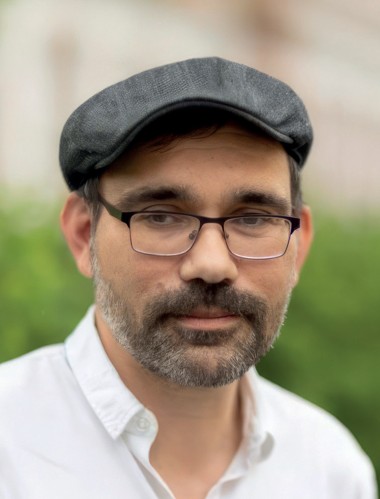
Francesco Arman is a Roma activist, cultural practitioner, and politician. In his current role as a city councillor, he is particularly committed to social inclusion, educational equity, and the empowerment of marginalised communities at the municipal level. In education and public outreach, he works on issues relating to the history, rights, and representation of Sinti and Roma, and advocates for their visibility and political participation. As a co-founder and former chair of the Studierendenverband der Sinti und Roma in Deutschland e.V. (Association of Sinti and Roma Students in Germany), he has played a key role in supporting Sinti and Roma in academic contexts.
Dr. Maria Bogdan
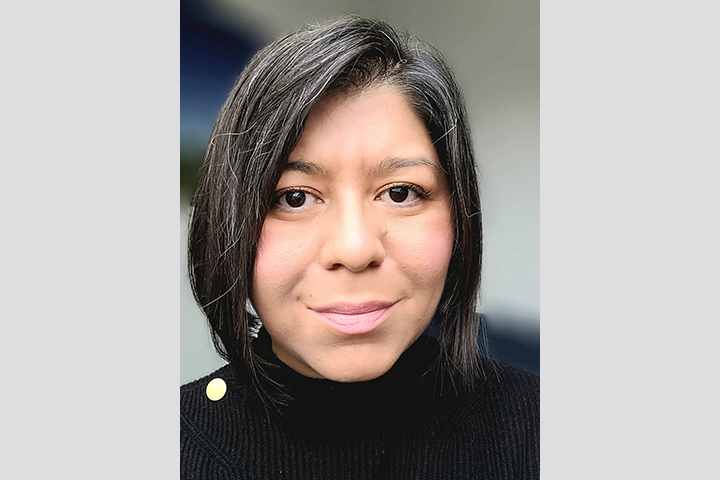
Dr. Maria Bogdan is a media scholar and cultural theorist focusing on the relationship between racism and media. She holds a PhD in Film, Media, and Cultural Theory from Eötvös Loránd University in Budapest and is a Fulbright alumna as well as co-founder and editor of the journal Critical Romani Studies.
Radoslav Ganev

Radoslav Ganev is a political scientist whose research focuses on the representation of ethnic minorities and the political participation of marginalized groups. He works in the fields of migration and integration and is actively engaged in civil society, including serving as a board member of Lichterkette e.V. He is the founder of the Roma self-organization Romanity e.V. and co-founder of the Association of Sinti and Roma Students in Germany. He is currently pursuing a PhD on the topic “Successful Educational Trajectories of Sinti and Roma: Implications for Social Work and Higher Education.”
Mag.a Mirjam-Angela Karoly
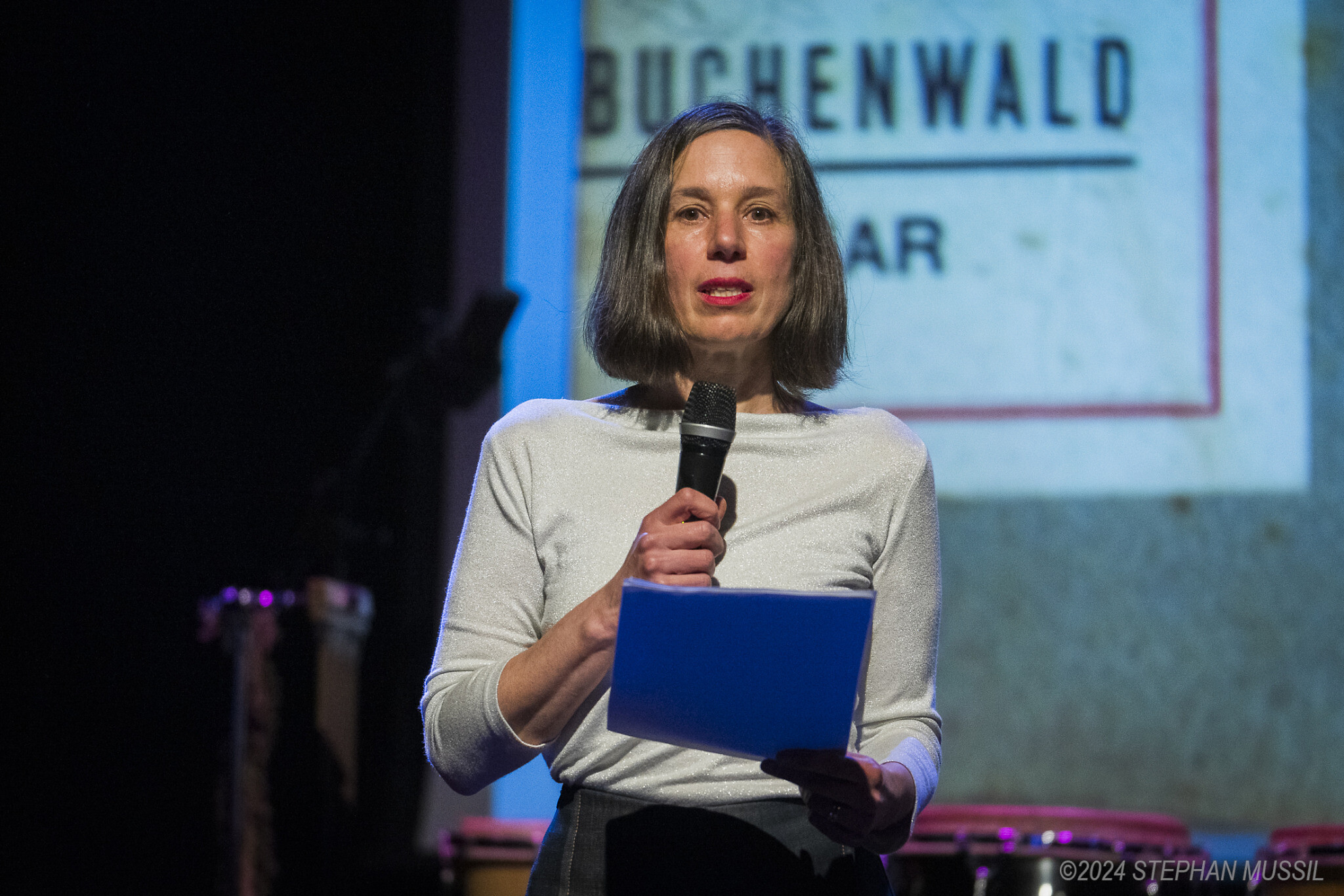
Mag.a Mirjam-Angela Karoly is a political scientist with extensive international expertise in the fields of human rights, minority policies, as well as anti-discrimination and inclusion work. From 2013 to 2017, she headed the OSCE Contact Point for Roma and Sinti Issues in Warsaw; prior to that, she worked as a Senior Advisor on Minority Rights at the OSCE Mission in Kosovo. For many years, she has been committed to advancing the rights and social recognition of Sinti and Roma. She is a member of the Austrian Roma Advisory Council and an honorary member of Romano Centro.
She is also active in the field of international Holocaust remembrance. Since 2024, she has represented the Vienna Wiesenthal Institute for Holocaust Studies (VWI) in the International Holocaust Remembrance Alliance (IHRA) and is an expert member of the Committee on the Genocide of the Roma, which she has chaired since 2026. In this role, she is particularly committed to strengthening education, remembrance, and research on the genocide of Sinti and Roma.
Silas Kropf

Silas Kropf is a social worker and a German Sinto who has long been engaged in advocating for the rights and social participation of Sinti and Roma in Germany. He serves as Chairperson of the Executive Board of the Reporting and Information Centre on Antigypsyism (MIA e.V.) and is also a co-founder of the Cologne Queer Roma Initiative.
His work focuses on supporting civil society organizations and increasing the visibility of Sinti and Roma communities.
Dr. Sunnie Rucker-Chang
Dr. Sunnie Rucker-Chang is the Kenneth E. Naylor Professor of South Slavic Culture and Associate Professor of Slavic and East European Languages and Cultures and Interim chair of African and African American Studies and at the Ohio State University. She works on the social construction of race and culture as it relates to privileged and marginalized communities in Europe.
Dr. Mihai Surdu
Dr. Mihai Surdu is a sociologist and scholar in Romani Studies, focusing on knowledge production and classification practices. He has held positions at the Institute for Advanced Study at Central European University and the Max Planck Institute for the History of Science, and is currently a visiting researcher in Science and Technology Studies.
His book Those Who Count. Expert Practices of Roma Classification (2016) examines the scientific practices of categorizing and counting Roma populations and their political implications.
Dr. Joanna Talewicz-Kwiatkowska
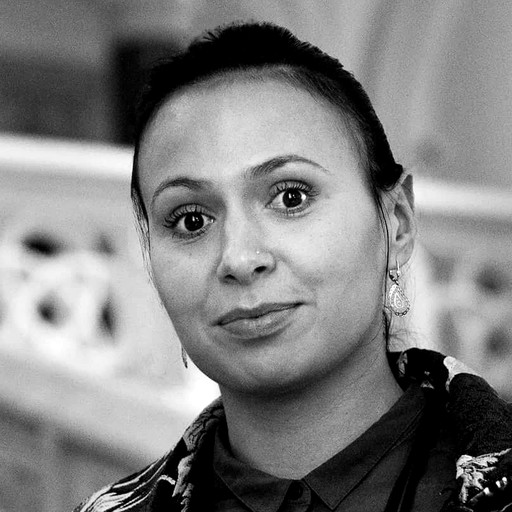
Dr. Joanna Talewicz-Kwiatkowska is a cultural anthropologist at the Jagiellonian University in Kraków, specializing in Roma, minority issues, and human rights. She completed her PhD in 2011 on the impact of EU funding programs on the living conditions of Roma in Poland and is active in both research and teaching.
She is also engaged in civil society, serves as editor of Dialog Pheniben, and is a member of the Polish delegation to the International Holocaust Remembrance Alliance (IHRA).
Dr. Mirjam Wilhelm
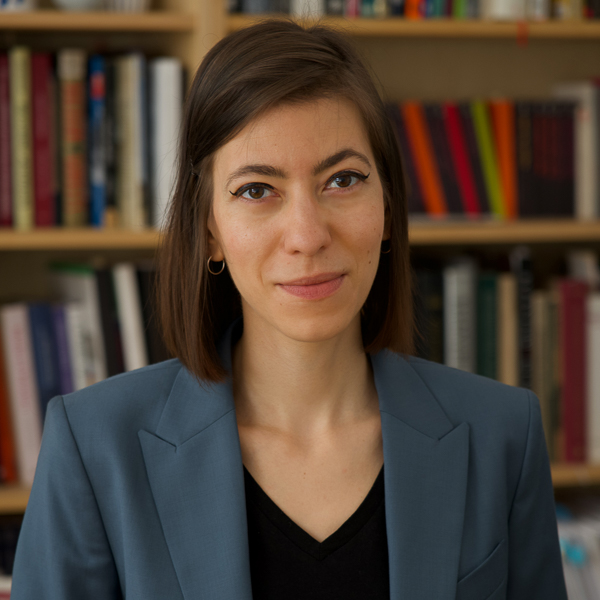
Dr. Mirjam Wilhelm is an art historian and has been a research fellow at the Vienna Wiesenthal Institute for Holocaust Studies (VWI) since 2021. She completed her PhD at the University of Oldenburg and was a Visiting Assistant in Research at Yale University in 2018.
Her research spans history, Jewish studies, cultural studies, and art and visual studies.