Transformation Studies – Master of Arts (M.A.)

Study social transformation and sustainability, and learn how to actively shape change.

Contents

Understand social-ecological problems and social change processes, and analyze possible futures

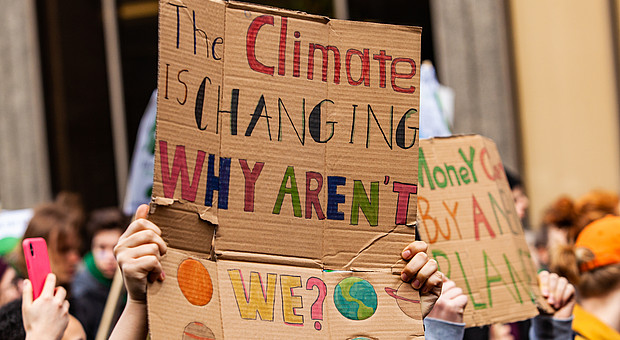
Climate change, social inequality, global conflicts: in the M.A. Transformation Studies program, which is unique in Germany, you’ll deal with the central social-ecological problems of our time and discover how social change can be achieved.

You’ll examine the causes and dynamics of today’s crises, learn about theoretical perspectives that are critical of authority and growth, and reflect on the possibilities and limitations they have for social change.

This interdisciplinary program at the Norbert Elias Center for Transformation Design & Research (NEC) at Europa-Universität Flensburg (EUF) combines academic analysis with creative thinking and practical knowledge of change.

You can expect small study groups, diverse real-world projects, individual supervision, and inspiring encounters with experts.

The degree program at a glance

Degree

Master of Arts (M.A.)

Duration

4 semesters (= 2 years)

Study start

Fall semester (= September)

Languages

German

Application period

May 15  to August 31

Tuition fees

None, but a semester fee is payable each semester

Type of course

Full time

Semester abroad

Optional

Internship

Mandatory

Want a first impression?

Here you’ll find everything you need to know about applying, admission, and deadlines

To the info

Course content: What this degree program is all about

  • Contemporary issues: You’ll discuss the social and ecological causes and effects of major crises – from climate change and species extinction to global conflicts, colonialism, economic stagnation, and social inequality.
  • Critical perspectives: From a point of view critical of growth, capitalism, and authority, you’ll analyse and discuss the possibilities and limits of societal transformation.
  • Interdisciplinarity: A single discipline is not sufficient to understand the connections between climate change and inequality, resource conflicts and financial crises, and resource consumption and capitalism. That’s why the program combines approaches from sociology, ecology, history, plural economics, geography, law, the arts, education, and philosophy.
  • Practical relevance: The study program combines academic work with creative thinking and action. The goal is to develop and test practical knowledge of change for sustainable societal transformation.

Want a second impression?

Checklist: Is this degree program right for you?

  • You are interested in sustainability, the environment, and justice – and you want to understand how it all fits together.
  • You believe that current economic practises and dominant social models are not sustainable and need fundamental change.
  • You want to understand transformation processes, help shape society, and make a meaningful contribution.
  • You value learning on an equal footing – with strong support, personal interaction, and small study groups.
  • You believe practical projects are an integral part of your studies, and that your ideas deserve space to grow.
  • You know that today’s big questions can only be understood and answered through an interdisciplinary approach.
  • You enjoy reading and aren’t afraid of challenging texts that broadenn your view of the world.
  • You’re not interested in dull knowledge tests – you want creative, reflective, and innovative exam formats.
  • You want a career that is meaningful and socially relevant.

What other experts say about the program

Course structure: Your path through the Transformation Studies degree program

1. Semester2. Semester3. Semester4. Semester
Module GD: Diagnoses of the present – socio-ecological transformations and their problematization *Module HR: Historical reconstructions – theories and practices of social change *Module VZ: Variants of the future *Module TH: Master's thesis
Module M: Transdisciplinary research and methods
Module KT: Teaching-integrated research: cultural transformations – food, housing, mobilityModule TD: Transformation design
* The marked modules consist of the colloquium “Transformation research” as well as six courses, four of which must be completed.

This is what your studies will look like – semester by semester

In your first semester, you’ll explore a range of contemporary social-ecological crises and conflicts.

You’ll discuss theories and analyses of the status quo from different disciplinary perspectives and learn how crises are interconnected.

At the same time, you’ll gain practical research experience through your own project – you’ll learn how research works by doing it yourself. Your project will focus on social-ecological transformation processes in areas such as nutrition, housing, or mobility. Gaining your own research experience isn’t just rewarding – it also strengthens your profile for future applications in academia or industry.

In your second semester, you’ll continue your research project, but turn your focus to the past as today’s societies and their crises are the results of earlier transformation processes.

This historical knowledge will help you understand why we find ourselves in the current situation.

You’ll analyze local, regional, and global transformation processes over the past centuries, and deal in depth with systemic transformations.

You’ll learn how future workshops, real-world labs, and experiments work — and explore ways to involve stakeholders in transformation processes.

In your third semester, you’ll immerse yourself in research on possible societal futures and examine the solutions currently being debated in academia — such as alternative economic models, sufficiency policies, or changes in the legal system.

You’ll strengthen your organizational, decision-making, and communication skills by planning and holding a conference.

You’ll also develop your own project with real transformation potential, and in doing so learn methods for project design, planning, and creative idea generation.

In your fourth semester, the focus is on writing your master’s thesis.

An accompanying colloquium will support you in terms of content and methodology.

Outstanding master’s theses will be published in the Transformation Working Paper Series.

In the first three semesters, you have the freedom to choose four out of six possible seminars, offered from a range of disciplines. Innovative and reflective exam formats combine the content of the seminars.

Thinking about spending some time abroad?

If you want to go abroad, you can do so as part of your Transformation Studies program. Going abroad is ideal in the 3rd or 4th semester.

You have a few options:

  • A semester abroad at a partner university: Would you like financial and organizational support? Then a semester at one of EUF’s partner universities is the best option. Funded by the Erasmus+ program and supported by EUF’s International Center, you can spend an exciting semester at one of nearly 90 partner universities worldwide.
  • A self-organized semester abroad at a university of your choosing: None of the EUF partner universities feel right for you? You can also go abroad as a free mover, funding yourself and enjoying maximum freedom in your choice of university.
  • An internship abroad: If you want to work abroad, you can opt for an internship and immerse yourself even deeper in another culture. This will boost your profile with international employers and strengthen your job-specific language skills.

Whichever path you choose, we highly recommend spending time abroad. You’ll improve your language skills, gain intercultural experience, and collect unforgettable memories. For more details, check out our page on studying abroad.

Want to know more?

All info about the program at a glance

Download Flyer (PDF, 642 KB)

Help and advice: Where to find support

Do you have questions about the content of the degree program?

Dr.Maike Böcker

Transformation studies academic advice | program coordinator

Phone
+49 461 805 2637
E-mail
maike.boecker-PleaseRemoveIncludingDashes-@uni-flensburg.de
Building
Gebäude Tallinn 1
Room
TAL 307
Street
Mitscherlich-Nielsen-Straße 1a
Post code / City
24943 Flensburg
Show details

Do you have general questions about studying at Europa-Universität Flensburg (EUF)? Are you unsure which degree program suits you best?

Student feedback: What graduates say about the program

Admission requirements: What you need to study Transformation Studies

At a glance

  • The program has a limited number of places. Your bachelor’s degree grade determines whether you’ll be admitted.
  • You need a completed bachelor’s degree with 30 credits in social sciences, humanities, or environmental sciences.
  • You must be proficient in German and English and be able to provide proof of your language skills.

For those who want to know exactly what they need to do:

Check admission requirements

Career prospects: What are the options after graduation?

Career prospects

Your M.A. in Transformation Studies opens doors in research, politics, business, and society.

It prepares you for positions of responsibility in which knowledge about change and the shaping of transformation processes is key.

Typical workplaces:

  • Institutions and organizations carrying out media, press, and public relations work on societal crises, transformation, and sustainability
  • Corporate social responsibility and sustainability departments in companies
  • Public welfare-orientated and alternative-economy businesses
  • International organizations and NGOs
  • Cultural and educational organizations
  • Environmental and sustainability departments in the public sector
  • Research institutions
  • Political parties
  • Foundations

Typical career paths:

  • You could work as a specialist advisor for social-ecological transformation for a member of parliament or an environmental protection organization.
  • You could develop climate protection concepts as a climate protection manager in the public sector.
  • You could carry out research in local or global transformation projects as a research assistant at a university.
  • You could manage a political party’s district association and visit communities.
  • You could plan campaigns and fundraising as a coordinator for a climate protection organization.
  • You could promote gender equality as an equality opportunities officer for a local authority.

Success stories:

You can find more information about the career prospects of our graduates on our website.

Doctorate

With a master’s degree in Transformation Studies, you have the opportunity to pursue a doctorate.

Doctoral studies at EUF

These are the experts you’ll meet in the M.A. Transformation Studies program

The M.A. Transformation Studies program stands out for its dedicated teaching staff and renowned guest lecturers. 

Find out here which experts in societal transformation you’ll have the chance to engage with:

Our experts

When visions become reality: students’ transformative projects

In the M.A. Transformation Studies program, you’ll actively work on solving social and ecological problems. Since 2017, students in Flensburg have been linking their transformation knowledge with the city’s own transformation processes.

Here you can see their award-winning projects:

Curious about even more projects?

Discover transformative projects

Frequently asked questions (FAQ)

  • The M.A. Transformation Studies is a unique master’s program that equips you to engage in social-ecological transformation processes, and shape the future.
  • If you care about the challenges we face today and want to make a difference, this program will provide you with the right skills – critical, practical, and interdisciplinary.
  • With sustainability and transformation expertise in growing demand, the program opens up strong career opportunities.
  • During the master’s program, your studies will be enriched by renowned teaching staff, sound academic perspectives, and independent creative projects.
  • And if you want to study abroad, that option is available to you.

The M.A. Transformation Studies takes two years (four semesters).

  • The M.A. Transformation Studies begins every year in the fall semester.
  • You can find the relevant dates on the EUF website under Dates and Deadlines.

No, a semester abroad is optional. If you choose to do one, you can do so as part of the Erasmus+ program at one of nearly 90 partner universities, or independently as a free mover at a university of your choosing. An internship abroad is also possible. Spending time abroad helps boost your intercultural skills and international career opportunities.

The program has limited place – you need a good bachelor’s degree grade. In addition, your bachelor’s degree should be relevant to Transformation Studies and you must have a good command of German and English. You can find the exact admission requirements on the program’s application page.

You must provide proof of good German and English skills. The exact language requirements are listed on the program’s application page.

The Transformation Studies program opens up a wide range of career paths in research, media, business, education, administration, and politics. You could work in advisory roles, coordination, project management, or research. Typical workplaces include environmental or climate protection organizations, government agencies dealing with social-ecological issues, political parties, companies, and research institutes.

Your contacts for questions and problems are the Transformation Studies academic advisor, as well as the International Center, with Patrick Will being responsible for FIT@EUF, a project that supports the integration of international talent into EUF and the job market in Germany. He will be happy to answer any questions you may have about your studies.

EUF has a rating of 4 out of 5 stars on Studycheck. 93 percent of students would recommend EUF to others.

The M.A. Transformation Studies program has a rating of 4.2 out of 5 stars on Studycheck – slightly above the overall average for EUF. 100% of respondents would recommend it to others. The program is praised for its critical engagement with topics, dedicated lecturers, and the collaborative spirit among students.

The M.A. Transformation Studies program is organized by a research center at EUF – the Norbert Elias Center for Transformation Design & Research (NEC).

EUF is a small university in northern Germany, set on a green campus with a large international student community. Teaching and research focus on topics such as justice, sustainability, and diversity across education, business, society, culture, and the environment – perfectly matching Flensburg’s active cultural and political scene.

On campus, you’ll find free language courses, a sports center, a swimming pool, and various student initiatives (covering politics, environment, and religion). In the evenings, events such as movie and game nights, theater, or BBQs are on offer.

Public transport makes it easy to reach several beaches – Flensburg is located on the Flensburg Firth,  and the Baltic Sea, the North Sea and Denmark are close by. If you want to take the train to Hamburg, it’s just two hours away.

No, EUF doesn’t charge tuition fees, but a semester fee is payable each semester.

Accreditation

Akkreditierungslogo des Akkreditierungsrates

Overview of all the degree programs

Browse degree programs

Transformation Studies on Social Media