The EUF partner university in Košice

When it comes to EU countries in Eastern Central Europe, both the general public and our students often express reservations and prejudices. Cities are said to be grey, dirty, and unsafe, and the infrastructure underdeveloped. More than 30 years after the fall of the Iron Curtain, these commonly held negative assumptions are entirely unfounded—but only those who actually visit countries like Poland, the Czech Republic, Hungary, or Slovakia get to see this for themselves.
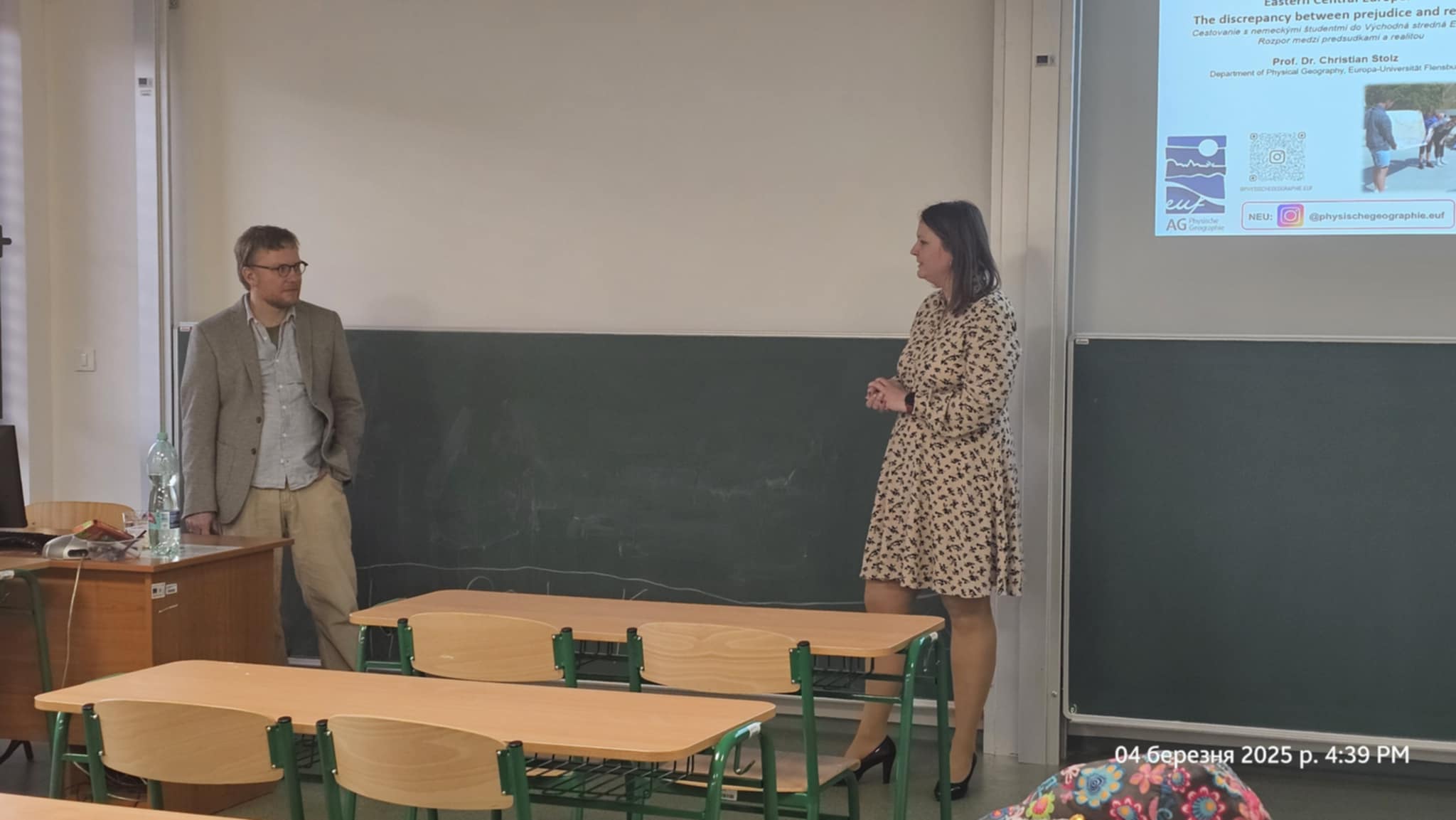
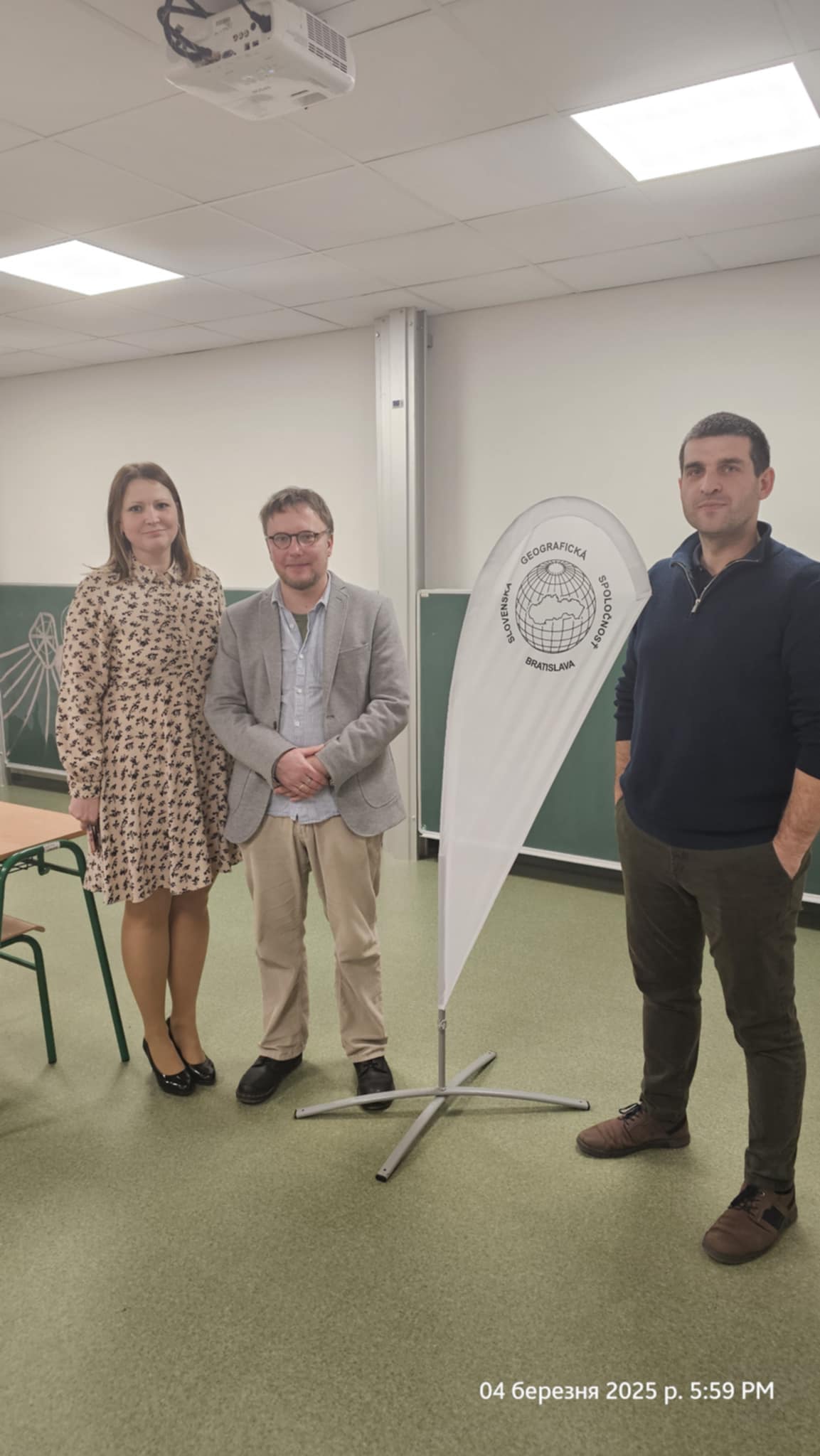
As the first official visit within the Erasmus+ partnership signed in 2023 between Europa-Universität Flensburg and Pavol Jozef Šafárik University in Košice (also known as Kassa or Kaschau), Christian Stolz from the Department of Integrative Geography spent a week at the partner university. During eight hours of teaching in the field of geomorphology and a public lecture delivered in English to the Slovak Geographical Society, he was warmly welcomed by students and colleagues alike.
The cleanliness, beauty, and modern feel of the city of 220,000 residents—just 20 km from the Hungarian border and 80 km from the Ukrainian border—left a strong impression on the professor from Flensburg. In particular, he noted that the level of digitalization seemed significantly more advanced than back home. He was also impressed by the strong research orientation of the university and the high level of subject knowledge among students in both teacher training and academic geography programs.
The surrounding region is equally worth seeing, with numerous historical sites, several of which are UNESCO World Heritage Sites. Also nearby is the breathtaking High Tatras, the world’s smallest high mountain range, featuring Gerlachovský Peak, which reaches 2,650 meters.
Great opportunities for EUF students
Students can also spend a semester in Košice through the Erasmus+ partnership. The Department of Geography offers dedicated courses in English for exchange students. In addition, access to English-taught courses in related study programs is easily arranged. A large share of the teaching staff also speaks German—partly because the region is still home to the Carpathian Germans, a longstanding German-speaking minority.