Press releases of Europa-Universität Flensburg (EUF)
Interdisciplinary and Practice-Oriented: A Decade of Educational Research in Flensburg
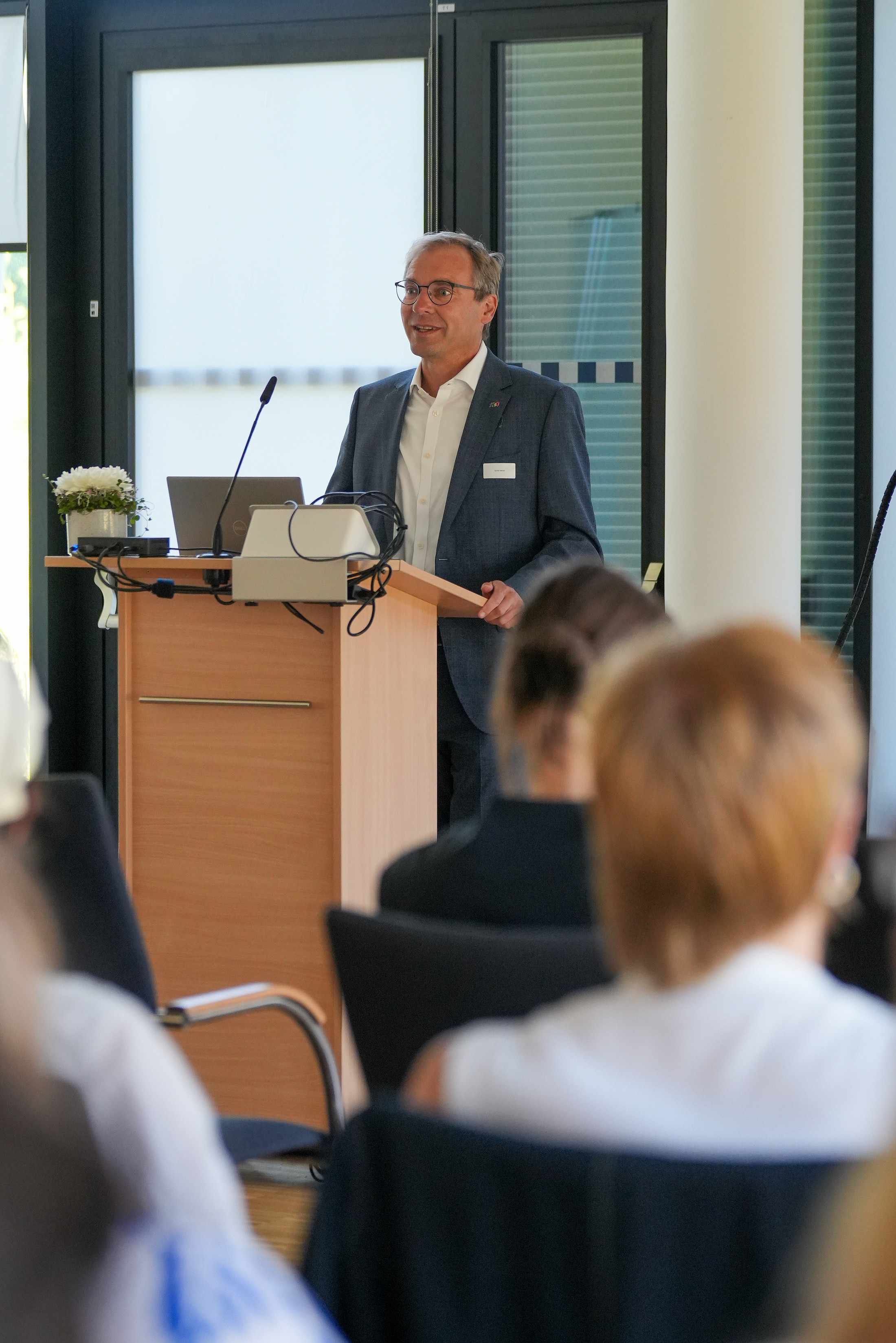
ZeBUSS was founded in 2016 as the first flagship center at EUF. The tenth anniversary is being celebrated in Flensburg with an event and the symposium Well-Being and Situations of Violence.
State Secretary Guido Wendt: “The establishment of ZeBUSS as the first of three research centers marked the start of a successful process of building EUF’s academic profile. With its interdisciplinary focus and close ties to schools and other educational institutions, ZeBUSS contributes significantly to strengthening the educational sciences at EUF. With a significant increase in external funding for ZeBUSS, EUF is underscoring its future potential as a research hub in Schleswig-Holstein.”
Over 23.5 million Euros in External Research Funding
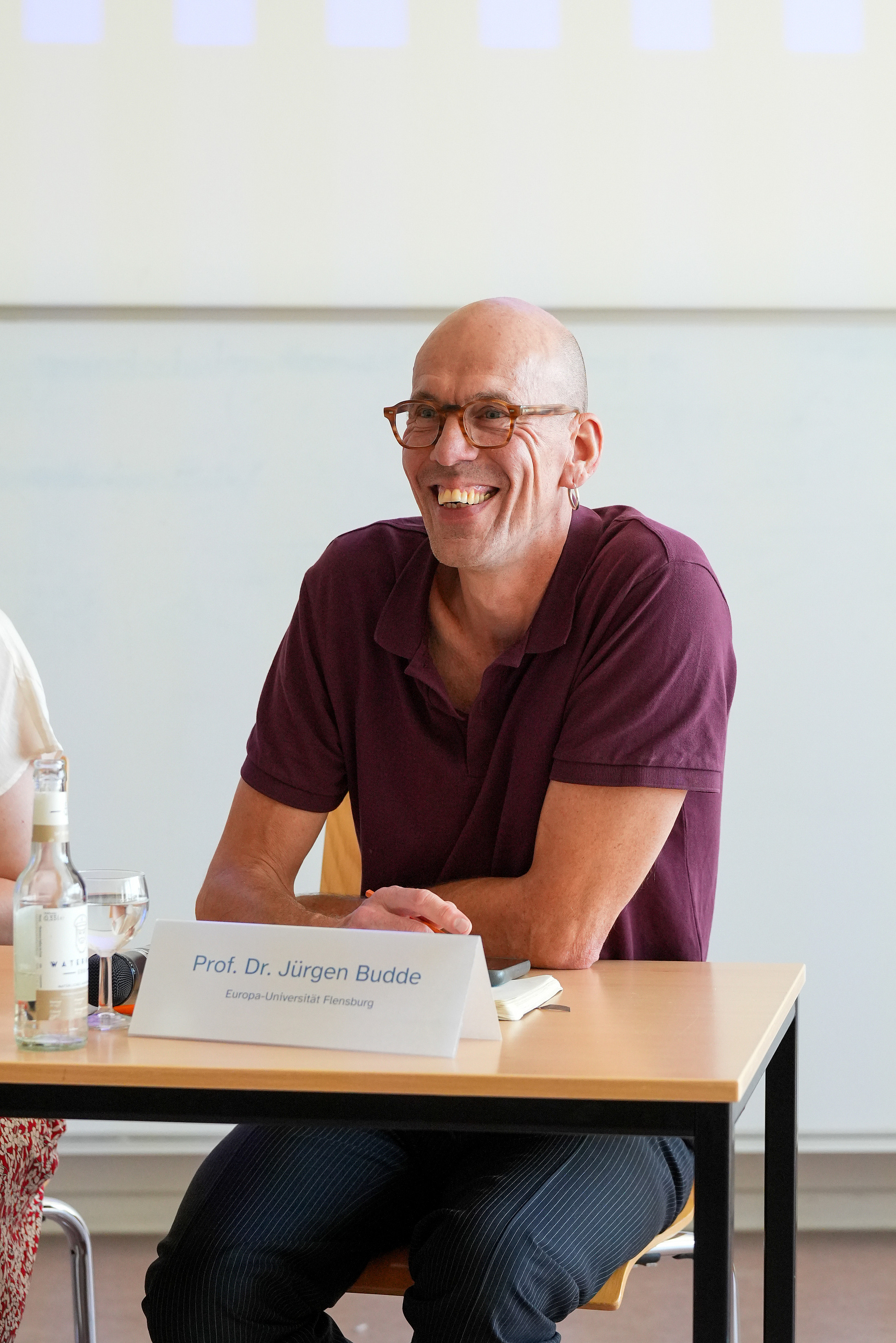
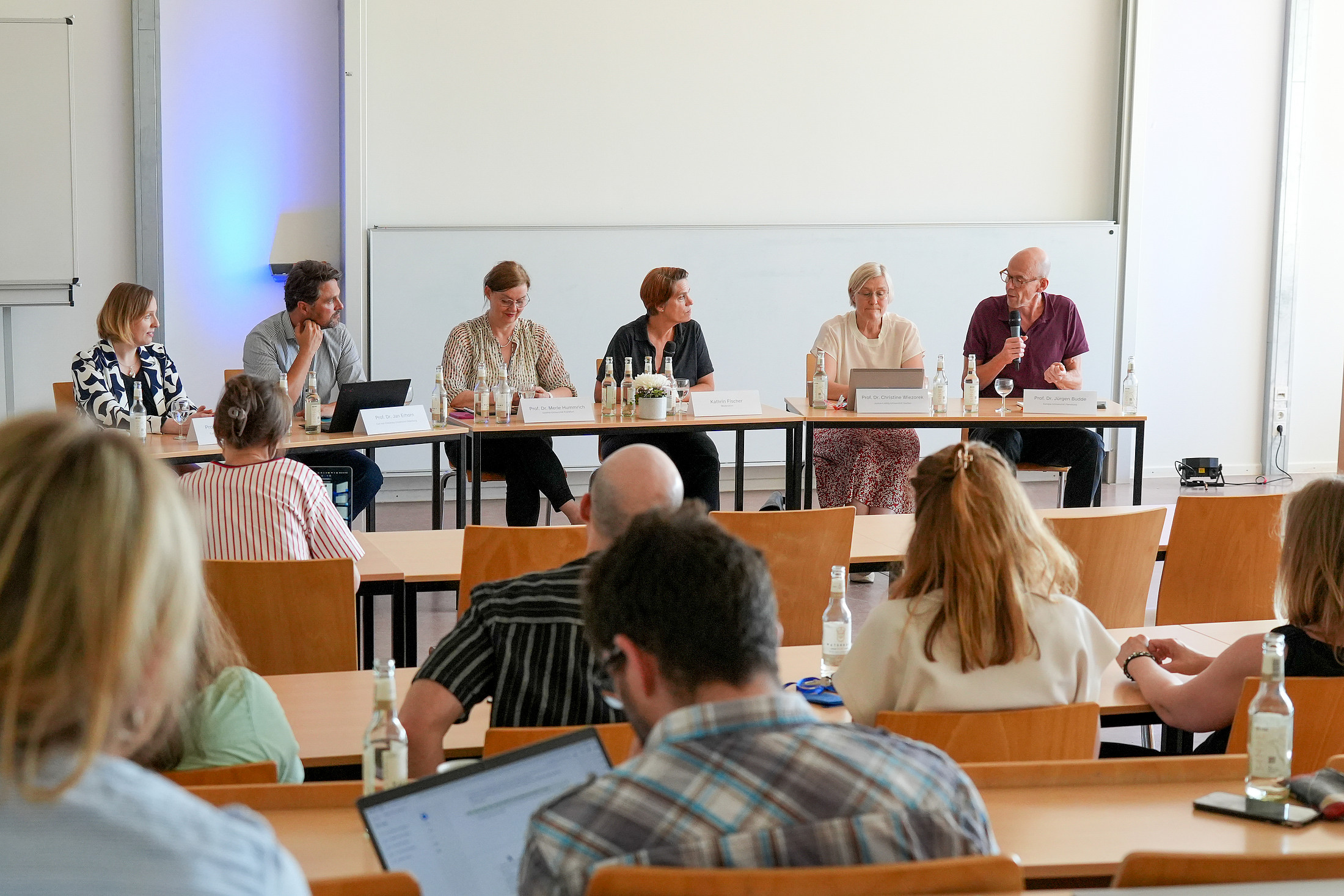
“With the founding of ZeBUSS ten years ago, EUF brought together Flensburg’s educational research into a single interdisciplinary center. In doing so, we have fostered collaboration across different institutes and are working together on pressing educational issues. Over the past ten years, a vibrant center has developed in which we not only conduct research on issues within Schleswig-Holstein’s educational landscape but also examine topics and perspectives that are discussed far beyond its borders,” explains Prof. Dr. Jürgen Budde, Managing Director of the research center: “As part of our anniversary symposium, we are discussing the topics of well-being and situations of violence. This demonstrates the innovative strength of ZeBUSS: consistently examining research from new perspectives and bringing together interdisciplinary expertise.” Over the past 10 years, researchers at the center have secured more than 23.5 million euros in external research funding.
Symposium Brings Together the Topics of Well-Being and Situations of Violence

The symposium, which is taking place as part of the anniversary, brings together the topics of well-being and situations of violence, two current fields of growing importance, and highlights their mutual interactions in school contexts. The contributions from researchers across a wide range of disciplines and the interconnection of these two topics demonstrate ZeBUSS’ interdisciplinary and innovative approach.
Research in four core research areas of educational practice
At ZeBUSS, educational practice is examined in four core research areas. This involves not only researching theories and approaches but also ensuring knowledge transfer into practical application and teaching. Schools, daycare centers, and educational institutions receive support in implementing educational concepts. Scientific findings are directly integrated into the training of prospective teachers. The center’s interdisciplinary focus allows for a wide variety of research topics and projects to be carried out.
Difference and Inclusion
In the area of Difference and Inclusion, researchers examine processes of differentiation and develop approaches to overcoming disadvantage. Educational institutions receive support in implementing inclusive concepts and managing diversity. At the same time, findings are incorporated into teacher training on inclusion and diversity sensitivity. Students learn to engage reflectively with heterogeneity and inequalities in educational settings.
In the DaF-L project, for example, researchers developed a digital reading test for inclusive primary schools that directly supports teachers with supplementary materials. The project Education for Inclusive Concepts of Belonging in the German-Danish Border Region examines how a sense of belonging is formed and understood in German and Danish schools in the border region. The early-career research group Gender 3.0 in Schools examines the needs and opportunities arising from the introduction of the “diverse” gender identity in schools to ensure the inclusion and equal educational participation of gender-diverse students.
Researchers in the Violence and Discrimination focus area analyze the causes, manifestations, and effects of discrimination and violence. In practice, this involves supporting the development of prevention strategies and professional development programs for education professionals. For prospective teachers in their degree programs, this research ensures that reflection on discriminatory structures and forms of violence in educational contexts is included in the curriculum.
As part of the BMBFSFS-funded early-career research group Becoming a Reference Person in Schools for Handling Cases of Child Abuse (RPSKM), a training course has been developed for all individuals working in schools. The early-career research group Continuities and Reconfigurations of Institutional Racism in Schools examines the conditions, mechanisms, and forms of institutional racism in schools.
Competency development and professionalization
A key component of the research is the continued development of the training, further training and continuing professional development (Aus-, Fort- und Weiterbildung) of teachers. The focus here is on quality improvement in educational institutions and the teaching of scientifically grounded instructional design, assessment, and pedagogical professionalism.
As part of the EuViS project, a swimming instruction app was developed to support teachers in planning individualized swimming lessons.
Mediality and Digitality
The Mediality and Digitality focus area examines the changes brought about by digital media, new forms of learning, and technological developments in society and educational processes. In practice, educational institutions are supported in developing digital educational concepts, and digital learning offerings are evaluated. Students are prepared for the realities of digital education through the development of media literacy and an understanding of AI.
The AIEduLab focuses on integrating AI media education into teacher training degree programs in a practice-oriented manner. The BIBEKI project investigates the extent to which the increased use of generative artificial intelligence reduces or exacerbates educational disparities.

Prof. Dr.Jürgen Budde
geschäftsführender Direktor ZeBUSS
- Phone
- +49 461 805 2260
- juergen.budde-PleaseRemoveIncludingDashes-@uni-flensburg.de
- Building
- Gebäude Helsinki
- Room
- HEL 116
- Street
- Auf dem Campus 1a
- Post code / City
- 24943 Flensburg
Dr.Simone Onur
wissenschaftliche Koordination ZeBUSS
- Phone
- +49 461 805 3042
- simone.onur-PleaseRemoveIncludingDashes-@uni-flensburg.de
- Building
- Gebäude Riga 5
- Room
- RIG 504
- Street
- Mitscherlich-Nielsen-Straße 2e
- Post code / City
- 24943 Flensburg
Juliane Groß Friederichsen
Hauptamtlich tätig
- Phone
- +49 461 805 2771
- juliane.gross-PleaseRemoveIncludingDashes-@uni-flensburg.de
- Building
- Gebäude Dublin
- Room
- DUB 220
- Street
- Campusallee 3
- Post code / City
- 24943 Flensburg