

Special Education Teaching – Master of Education (M.Ed.)

Support children and adolescents with special educational needs in an inclusive and creative way.

Contents

Commit to inclusion every day and become an expert in special education teaching!

Support children and adolescents with special educational needs by writing educational plans, supervising school support staff, and holding conversations with youth welfare offices: Your tasks as a special education teaching professional often differ significantly from those of a teacher at a mainstream school.

In special education teaching, you support children and adolescents who need help due to learning difficulties, emotional challenges, physical disabilities, or other limitations. In doing so, you actively promote inclusion in our society and enable students with special educational needs to access opportunities and participation.

With the M.Ed. Special Education Teaching at Europa-Universität Flensburg (EUF), we support you on your path to this meaningful profession. The master’s program consists of three areas of study:

With subject-didactic knowledge in your teaching subject, helpful methods in special education diagnostics, therapy, and counseling, as well as plenty of practical experience at schools and support centers, we optimally prepare you for a career in special education teaching. Read on if you want to know more!

The degree program at a glance

Degree

Master of Education (M.Ed.)

Duration

4 semesters (= 2 years)

Study start

Fall semester (= September)

Languages

German

Application period

May 15 to August 15

Tuition fees

None, but a semester fee is payable each semester

Type of course

Full time

Semester abroad

Optional

Internship

Mandatory

Here you’ll find everything you need to know about applying, admission, and deadlines

Let’s go!
Why Special Education Teaching?

Course content: What this degree program is all about

  • The content of the subject Special Education Psychology, for example:
    • What mental health conditions commonly occur in children and adolescents?
    • How can these conditions be prevented?
    • How do you support colleagues in working with children and adolescents with mental health conditions?
    • How do you advise the parents of students with mental health conditions?
  • The content of your teaching subject, for example:
    • Research-oriented work in the subject of Technology (Primary Level)
    • Language and media in the subject of German (Secondary Level)
    • Arithmetic, elements of number theory, and stochastics in the subject of Mathematics (primary level)
    • Special difficulties of the Danish language in the subject of Danish (secondary level)
  • The content of your special education focus areas, for example:
    • Procedures and methods of diagnostics in the focus area Special Education: Intellectual Disabilities
    • Speech, voice, hearing, and communication disorders in the focus area Special Education: Speech and Language Education
    • Self-reflection and self-management in the profession in the focus area Special Education to Promote Social and Emotional Learning
    • Dyslexia and dyscalculia therapy in the focus area Special Education: Learning Difficulties
  • Practical experience at school:
    • What does the daily teaching routine look like for Special Education Teaching professionals?
    • What challenges do you encounter there, and how do you handle them?
    • How do you plan and reflect on (special) lessons or small-group support?

The four special education focus areas

For your Special Education Teaching studies, you choose two of the four special education focus areas. Here you can find all the information:

Checklist: Is this degree program right for you?

  • You are passionate about equal opportunities and inclusion – you believe everyone has a right to education and want to actively contribute to making it a reality.
  • You enjoy working with children and adolescents, as well as their parents and other contacts, such as youth welfare offices or integration assistance services.
  • Standing in front of a class is no problem for you, but you also appreciate variety, such as writing educational plans or diagnosing learning levels.
  • You enjoy teamwork – in special education teaching, you often teach together with other professionals and school support staff.
  • You are eager to develop tailored learning materials and methods for different special educational needs. Crafting creative teaching materials and planning lessons brings you joy.
  • You are interested in psychological topics.
  • You want to always have a contact person for questions and problems during your studies.
  • You are prepared to complete a relatively long educational path to achieve your goal.
  • You are systematic, well-organized, and good at handling stress.
  • A secure job with an attractive salary is important to you, and you want meaningful work where you can truly make a difference.

Look ahead: Do your dream subjects suit this type of school?

If you want to become a teacher, you can easily plan your studies with the interactive Subject Combination Tool: try out which subjects and types of school you can combine. You'll immediately see which bachelor's and subsequent master's degree programs you need to complete for your chosen type of school, as well as which subjects (your future teaching subjects) you should select when applying. Be sure to check the notes below your selection.

For more details, just click the tiles: both the degree programs and your individual subjects will take you straight to all the information on admission, content, and course structure.

And if you'd like to discuss your subject combination with others, that's no problem either. You can share the link to it at any time. For example, with friends, your family, teachers, or – if you still have questions – Student Guidance and Counseling Service. Please note: all information is provided without guarantee.

Your subject combination for teacher training

Select the type of school and subjects – the order doesn’t matter. If an option is greyed out, you cannot combine it with your choice in the teacher training programme. If you want to choose a different type of school, you can find all the possible school types and subjects available at EUF on our general teacher training page.

Your studies

Bachelor‘s degree program

  • Lehrkraft zeigt einer Gruppe von Kindern an einem Tisch in einer Bibliothek etwas auf einem Blatt Papier.
    B.A.

    B.A. Educational Sciences

    Your path to becoming a teacher: Choose from 27 subjects.

    • 6 semesters (= 3 years)

    • Fall semester (= September)
    • German
    • Semester abroad: Optional
    • Internship: Mandatory

Master‘s degree program

  • Kind und Erwachsene sitzen auf dem Boden eines hellen Zimmers mit Spielzeug und Regalen im Hintergrund.
    M.Ed.

    M.Ed. Special Education Teaching

    Support children and adolescents with special needs inclusively and creatively.

    • 4 semesters (= 2 years)

    • Fall semester (= September)
    • German
    • Semester abroad: Optional
    • Internship: Mandatory

Programs (your selected subjects)

  • Kinder sitzen mit Studierenden auf dem Boden und testen Instrumente aus

    Special Education Primary Level

    Understand students' learning needs and design inclusive and professional learning experiences.

    • Special Education
    • Admission free
    • Stay abroad:

      Optional

    • Pick two out of four special education specializations:
      • Special Education for Individuals with Intellectual Disabilities
      • Special Education for Individuals with Language and Communication Disorders
      • Special Education and Teaching Methods for Promoting Emotional and Social Development
      • Special Education for Learning Disabilities
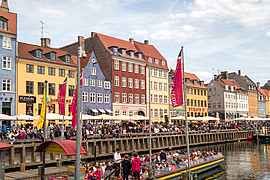
  • Bunte Häuser entlang der bekannten 'Nyhavn' in Kopenhagen, Dänermark.

    Danish

    Improve your Danish and bring the language, culture, and literature to life.

    • Primary School, Comprehensive School, Secondary School, Special Education, Vocational School: Nutrition and Domestic Science
    • Admission free
    • Entry requirements:

      Language certificate 

    • Stay abroad:

      Optional

  • Ein Stapel von Büchern steht mit einer Tasse Kaffee auf einem Wohnzimmertisch. Im Hintergrund ist eine junge Person am Lesen.

    German

    Opening up access to language, literature, and media.

    • Primary School, Comprehensive School, Secondary School, Special Education, Vocational School: Nutrition and Domestic Science
    • Admission free
    • Stay abroad:

      Optional

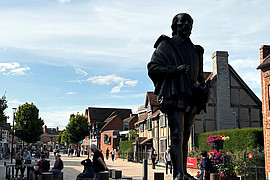
  • Eine Weitaufnahme einer Shakespeare Statue aus Stratford-Upon-Avon

    English

    Improve your English speaking skills and bring culture into the classroom.

    • Primary School, Comprehensive School, Secondary School, Special Education, Vocational School: Nutrition and Domestic Science, Vocational School: Industrial and Technical Sciences
    • Admission free
    • Entry requirements:

      Language certificate

    • Stay abroad:

      Mandatory

  • zeigt drei Studierende mit Rucksack am betreten der Campelle der Europa-Universität Flensburg

    Protestant Religion

    Connect questions of faith to school and society.

    • Primary School, Comprehensive School, Special Education
    • Admission free
    • Stay abroad:

      Optional

    • Name in B.A. Educational Sciences: Protestant Theology

  • eine Gruppe studierender sitzt in der Bibliothek an einem Tisch und diskutiert

    Catholic Religion

    Incorporate faith, tradition, and diversity into your teaching.

    • Primary School, Comprehensive School, Special Education
    • Admission free
    • Stay abroad:

      Optional

    • Name in the B.A. Educational Sciences: Catholic Theology

  • zeigt zwei junge Menschen an einer Staffelei, während eines Kunst Seminars. Der vordere Arm ist leicht verschwommen und skizziert eine Figur.

    Art

    Develop your own aesthetic approaches and incorporate them into your teaching.

    • Primary School, Comprehensive School, Secondary School, Special Education, Vocational School: Nutrition and Domestic Science
    • Admission free
    • Entry requirements:

      Aptitude test prior application

    • Stay abroad:

      Optional

    • Name in B.A. Educational Sciences: Art and Visual Media

  • Eine schwarze Tafel mit Mathematischen Formeln.

    Mathematics

    Make mathematical concepts understandable and accessible.

    • Primary School, Comprehensive School, Secondary School, Special Education, Vocational School: Nutrition and Domestic Science, Vocational School: Industrial and Technical Sciences
    • Admission free
    • Stay abroad:

      Optional

  • zeigt eine Person mit rotem T-Shirt von hinten, der Gitarrenhals ist links oben zu sehen.

    Music

    Explore music through listening, creating, and sharing.

    • Primary School, Comprehensive School, Special Education
    • Admission free
    • Entry requirements:

      Aptitude test prior application

    • Stay abroad:

      Optional

  • eine gemischte Gruppe Studierender sitzt an einem Tisch und diskutiert Fachliteratur

    Philosophy

    Ask big questions and encourage others to think.

    • Primary School, Comprehensive School, Special Education
    • Admission free
    • Stay abroad:

      Optional

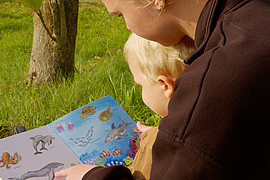
  • zeigt eine Studierende der Uni Flensburg vorlesend aus einem Tierbuch und einem Kind

    Integrated Primary Science and Social Studies

    Structure social studies lessons around children’s questions and everyday experiences.

    • Primary School, Special Education
    • Admission restricted
    • Stay abroad:

      Optional

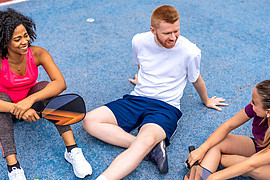
  • zeigt drei junge Menschen in Sport Kleidung, sie sitzen redend auf einem Sportplatz

    Sports

    Move people and design impactful sportseducation.

    • Primary School, Comprehensive School, Secondary School, Special Education, Vocational School: Nutrition and Domestic Science
    • Admission free
    • Entry requirements:

      Aptitute test prior application

    • Stay abroad:

      Optional

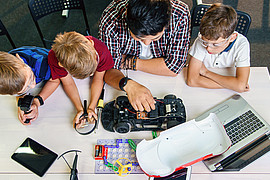
  • Eine Lehrkraft sitzt mit jungen Schülerinnen und Schülern an einem Tisch und erklärt Technik mit Automodell

    Technology

    Think about technology in practical, creative, and socially relevant ways.

    • Primary School, Comprehensive School, Special Education
    • Admission free
    • Stay abroad:

      Optional

  • eine junge Designerin zeichnet an einem braunen Schreibtisch an einem Modekonzept mit Bleistift

    Textile Studies

    Explore clothing, textiles, and fashion as culture and design.

    • Primary School, Comprehensive School, Special Education
    • Admission restricted
    • Stay abroad:

      Optional

    • Name in B.A. Educational Sciences: Textile and Fashion

  • Kinder sitzen mit Studierenden auf dem Boden und testen Instrumente aus

    Special Education Secondary Level

    Understand students' learning needs and design inclusive and professional learning experiences.

    • Special Education
    • Admission free
    • Stay abroad:

      Optional

    • Pick two out of four special education specializations:
      • Special Education for Individuals with Intellectual Disabilities
      • Special Education for Individuals with Language and Communication Disorders
      • Special Education and Teaching Methods for Promoting Emotional and Social Development
      • Special Education for Learning Disabilities
  • Eine Gruppe von Studierenden sitzt um einen Tisch während eines Chemie Seminars und führt Experimente durch.

    Chemistry

    Understand chemical concepts and explain them clearly and concisely.

    • Comprehensive School, Special Education
    • Admission free
    • Stay abroad:

      Optional

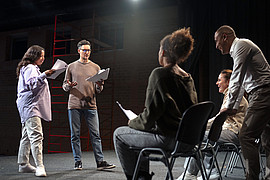
  • Vier Studierende und eine Dozierende Person befinden sich in einem Proberaumund proben für ein Theaterstück.

    Performing Arts

    Incorporate theater, play, and aesthetic practices into creative learning processes.

    • Comprehensive School, Secondary School, Special Education
    • Admission free
    • Entry requirements:

      Aptitude test prior to application

    • Stay abroad:

      Optional

    • Name in the B.A. Educational Sciences: Performing Arts/Theatre 

  • zwei lachende Studierende kochen selbstgemachte Pasta in Laborkittel in der Uni

    Health and Nutrition

    Incorporate health, nutrition, and life skills into your lessons.

    • Comprehensive School, Special Education
    • Admission free
    • Stay abroad:

      Optional

    • Name in B.A. Educational Sciences: Health and Nutrition

  • zeigt Bücher und einen Globus auf einem Schreibtisch vor einer blauen Weltkarte im Hintergrund.

    Geography

    Explore spaces, the environment, and society through a geographical lens.

    • Comprehensive School, Special Education
    • Admission free
    • Stay abroad:

      Optional

  • Nahaufnahme eines kleinen Mädchens vor einem dicken Buch. Eine Braune Brille liegt auf dem Buch.

    History

    Explore the past and bring history to life.

    • Comprehensive School, Secondary School, Special Education, Vocational School: Nutrition and Domestic Science
    • Admission free
    • Stay abroad:

      Optional

  • zeigt eine Lehrkraft mit drei Kindern, beim Assistieren eines Experiments in Laborkitteln und Schutzbrillen

    Physics

    Make physical phenomena understandable and allow students to experience them through experiments.

    • Comprehensive School, Special Education, Vocational School: Industrial and Technical Sciences
    • Admission free
    • Stay abroad:

      Optional

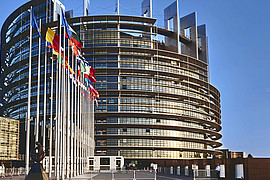
  • eine Weitaufnahme des Europa Parlaments, es wehen die Flaggen der EU Mitglieder in der Luft

    Economy/Politics

    Analyze the economy and politics and explain the connections between them.

    • Comprehensive School, Secondary School, Special Education, Vocational School: Nutrition and Domestic Science, Vocational School: Industrial and Technical Sciences
    • Admission free
    • Stay abroad:

      Optional

Want to study more than two subjects?

Learn more

Overview: These are the subjects available at EUF

Click through or filter by your preferred school type.

School types
eine Lehrkraft und ein lächelndes Mädchen das im Unterricht am Tisch arbeitet

Education and Society

Learn the fundamentals of educational science to support your teaching.

  • Primary School, Comprehensive School, Secondary School
  • Admission free
  • Stay abroad:

    Optional

  • Special features:

    Mandatory subject in the general education teacher training program

Drei Studierende arbeiten am Mikroskop in Labor Bekleidung

Biology

Explore the diversity of life and help others understand it.

  • Comprehensive School, Special Education
  • Admission free
  • Stay abroad:

    Optional

Eine Gruppe von Studierenden sitzt um einen Tisch während eines Chemie Seminars und führt Experimente durch.

Chemistry

Understand chemical concepts and explain them clearly and concisely.

  • Comprehensive School, Special Education
  • Admission free
  • Stay abroad:

    Optional

Bunte Häuser entlang der bekannten 'Nyhavn' in Kopenhagen, Dänermark.

Danish

Improve your Danish and bring the language, culture, and literature to life.

  • Primary School, Comprehensive School, Secondary School, Special Education, Vocational School: Nutrition and Domestic Science
  • Admission free
  • Entry requirements:

    Language certificate 

  • Stay abroad:

    Optional

Vier Studierende und eine Dozierende Person befinden sich in einem Proberaumund proben für ein Theaterstück.

Performing Arts

Incorporate theater, play, and aesthetic practices into creative learning processes.

  • Comprehensive School, Secondary School, Special Education
  • Admission free
  • Entry requirements:

    Aptitude test prior to application

  • Stay abroad:

    Optional

  • Name in the B.A. Educational Sciences: Performing Arts/Theatre 

Ein Stapel von Büchern steht mit einer Tasse Kaffee auf einem Wohnzimmertisch. Im Hintergrund ist eine junge Person am Lesen.

German

Opening up access to language, literature, and media.

  • Primary School, Comprehensive School, Secondary School, Special Education, Vocational School: Nutrition and Domestic Science
  • Admission free
  • Stay abroad:

    Optional

Eine Weitaufnahme einer Shakespeare Statue aus Stratford-Upon-Avon

English

Improve your English speaking skills and bring culture into the classroom.

  • Primary School, Comprehensive School, Secondary School, Special Education, Vocational School: Nutrition and Domestic Science, Vocational School: Industrial and Technical Sciences
  • Admission free
  • Entry requirements:

    Language certificate

  • Stay abroad:

    Mandatory

zeigt drei Studierende mit Rucksack am betreten der Campelle der Europa-Universität Flensburg

Protestant Religion

Connect questions of faith to school and society.

  • Primary School, Comprehensive School, Special Education
  • Admission free
  • Stay abroad:

    Optional

  • Name in B.A. Educational Sciences: Protestant Theology

zeigt Bücher und einen Globus auf einem Schreibtisch vor einer blauen Weltkarte im Hintergrund.

Geography

Explore spaces, the environment, and society through a geographical lens.

  • Comprehensive School, Special Education
  • Admission free
  • Stay abroad:

    Optional

Nahaufnahme eines kleinen Mädchens vor einem dicken Buch. Eine Braune Brille liegt auf dem Buch.

History

Explore the past and bring history to life.

  • Comprehensive School, Secondary School, Special Education, Vocational School: Nutrition and Domestic Science
  • Admission free
  • Stay abroad:

    Optional

zwei lachende Studierende kochen selbstgemachte Pasta in Laborkittel in der Uni

Health and Nutrition

Incorporate health, nutrition, and life skills into your lessons.

  • Comprehensive School, Special Education
  • Admission free
  • Stay abroad:

    Optional

  • Name in B.A. Educational Sciences: Health and Nutrition

eine Gruppe studierender sitzt in der Bibliothek an einem Tisch und diskutiert

Catholic Religion

Incorporate faith, tradition, and diversity into your teaching.

  • Primary School, Comprehensive School, Special Education
  • Admission free
  • Stay abroad:

    Optional

  • Name in the B.A. Educational Sciences: Catholic Theology

zeigt zwei junge Menschen an einer Staffelei, während eines Kunst Seminars. Der vordere Arm ist leicht verschwommen und skizziert eine Figur.

Art

Develop your own aesthetic approaches and incorporate them into your teaching.

  • Primary School, Comprehensive School, Secondary School, Special Education, Vocational School: Nutrition and Domestic Science
  • Admission free
  • Entry requirements:

    Aptitude test prior application

  • Stay abroad:

    Optional

  • Name in B.A. Educational Sciences: Art and Visual Media

Eine schwarze Tafel mit Mathematischen Formeln.

Mathematics

Make mathematical concepts understandable and accessible.

  • Primary School, Comprehensive School, Secondary School, Special Education, Vocational School: Nutrition and Domestic Science, Vocational School: Industrial and Technical Sciences
  • Admission free
  • Stay abroad:

    Optional

zeigt eine Person mit rotem T-Shirt von hinten, der Gitarrenhals ist links oben zu sehen.

Music

Explore music through listening, creating, and sharing.

  • Primary School, Comprehensive School, Special Education
  • Admission free
  • Entry requirements:

    Aptitude test prior application

  • Stay abroad:

    Optional

eine gemischte Gruppe Studierender sitzt an einem Tisch und diskutiert Fachliteratur

Philosophy

Ask big questions and encourage others to think.

  • Primary School, Comprehensive School, Special Education
  • Admission free
  • Stay abroad:

    Optional

zeigt eine Lehrkraft mit drei Kindern, beim Assistieren eines Experiments in Laborkitteln und Schutzbrillen

Physics

Make physical phenomena understandable and allow students to experience them through experiments.

  • Comprehensive School, Special Education, Vocational School: Industrial and Technical Sciences
  • Admission free
  • Stay abroad:

    Optional

zeigt eine Studierende der Uni Flensburg vorlesend aus einem Tierbuch und einem Kind

Integrated Primary Science and Social Studies

Structure social studies lessons around children’s questions and everyday experiences.

  • Primary School, Special Education
  • Admission restricted
  • Stay abroad:

    Optional

zeigt drei junge Menschen in Sport Kleidung, sie sitzen redend auf einem Sportplatz

Sports

Move people and design impactful sportseducation.

  • Primary School, Comprehensive School, Secondary School, Special Education, Vocational School: Nutrition and Domestic Science
  • Admission free
  • Entry requirements:

    Aptitute test prior application

  • Stay abroad:

    Optional

Eine Lehrkraft sitzt mit jungen Schülerinnen und Schülern an einem Tisch und erklärt Technik mit Automodell

Technology

Think about technology in practical, creative, and socially relevant ways.

  • Primary School, Comprehensive School, Special Education
  • Admission free
  • Stay abroad:

    Optional

eine junge Designerin zeichnet an einem braunen Schreibtisch an einem Modekonzept mit Bleistift

Textile Studies

Explore clothing, textiles, and fashion as culture and design.

  • Primary School, Comprehensive School, Special Education
  • Admission restricted
  • Stay abroad:

    Optional

  • Name in B.A. Educational Sciences: Textile and Fashion

eine Weitaufnahme des Europa Parlaments, es wehen die Flaggen der EU Mitglieder in der Luft

Economy/Politics

Analyze the economy and politics and explain the connections between them.

  • Comprehensive School, Secondary School, Special Education, Vocational School: Nutrition and Domestic Science, Vocational School: Industrial and Technical Sciences
  • Admission free
  • Stay abroad:

    Optional

eine Lehrkraft macht sensorische Übungen mit  Kindern

Special Education: Intellectual Disabilities

Open up educational pathways for children with complex learning needs.

  • Special Education
  • Admission free
  • Stay abroad:

    Optional

  • Special education specialization

Eine Gruppe von Kindern hält verschiedene Buchstaben hoch. Im Hintergrund ist eine Lehrkraft zu sehen.

Special Education: Speech and Language Education

Strengthen language and communication as the foundation for participation.

  • Special Education
  • Admission free
  • Stay abroad:

    Optional

  • Special education specialization

eine Lehrkraft und zwei junge Schüler*innen sitzen an einem kleinen weißen Tisch und machen Aufgaben

Special Education to Promote Social and Emotional Learning

Shaping Relationships, Prevention, and Support in Everyday School Life.

  • Special Education
  • Admission free
  • Stay abroad:

    Optional

  • Special education specialization

Weitaufnahme einer Lehramt Studierenden die einem Kind etwas vorliest.

Special Education: Learning Difficulties

Identify learning needs early on and provide targeted support for learning paths.

  • Special Education
  • Admission free
  • Stay abroad:

    Optional

  • Special education specialization

Oops, there are currently no subjects available for your selection. Simply adjust the filter and we will be able to show you something again.

You can find a comprehensive overview of all the modules for teacher training programs at the EUF here.

Course structure: Your path through the M.Ed. Special Education Teaching

1. Semester2. Semester3. Semester4. Semester
The Special Education Psychology programInternshipAdditional modules (depending on the course of study and focus)
Your teaching subjectMaster's thesis (elective concentration)
Your first special education focus area
Your second special education focus area

This is what your studies will look like – semester by semester

In the first and second semesters of your Special Education Teaching master’s program, you continue studying your teaching subject and the two special education focus areas you were studying in your bachelor’s. You move from the basics to in-depth knowledge and learn how to teach this knowledge to children and adolescents.

In the subject of Special Education Psychology, you deal with mental health conditions, their development, prevention, and treatment, as well as counseling for family members and colleagues.

Now it’s time for your internship! You work at a school and apply the knowledge you’ve already acquired in practice.

In addition, you continue studying your teaching subject and your two special education focus areas.

If you want to broaden your horizons with a stay abroad, now would be a good time.

In the fourth semester, you write your master’s thesis, which can be on a topic from any of your subjects – your teaching subject, your special education focus areas, or the Special Education Psychology subject.

Additionally, you attend further courses in your special education focus areas – by this time, you will have already completed your teaching subject.

Want to know all the details?

Off into the world: Your semester abroad

If you want to expand your theoretical and practical experience from your bachelor’s and the first semesters of your master’s and test it in a completely different environment, studying abroad or completing a practical phase abroad is an excellent option.

This way, you can experience the fact that schools do not operate the same way everywhere as they do in Germany. At EUF, we make it easy for you to opt for this adventure: You’ll receive organizational support from our International Center, financial assistance through the Erasmus+ program, and a predefined time frame so that your master’s studies will not normally take any longer. Worldwide, you have access to nearly 90 partner universities; as a free mover, you have an even wider selection.

However, the semester abroad is not mandatory. If you prefer to stay, you can simply take additional courses in your subjects.

Learn more

Help and advice: Where to find support

Do you have questions about the content of the program?

Do you have general questions about studying at Europa-Universität Flensburg (EUF)? Are you unsure which degree program suits you best?

Student feedback: What they say about the program

Admission requirements: What you need to study M.Ed. Special Education Training

At a glance

  • You need a qualified bachelor’s degree with a focus on special education teaching, such as the B.A. in Educational Sciences at EUF or a similar degree from another university.
    • “Qualified” means: In your bachelor’s, you should have studied two special education focus areas, one teaching subject, and a general pedagogical subject, such as Educational Sciences.
    • In the master’s program, you continue studying your special education focus areas and your teaching subject.
  • You should have a certain number of credit points in the following areas:
    • 50 credit points in special education teaching
      • Including 15 credit points in each of your two special education focus areas
    • 50 credit points in your teaching subject if it is taught at the primary level, or:
    • 60 credit points in your teaching subject if it is taught at the secondary level
    • 35 credit points in your general pedagogical subject
  • Your subject combination must be suitable for the M.Ed. Special Education Teaching.
  • You should have at least six weeks of practical experience at a school.
  • You should have a good command of German.
  • If you study English as a subject, you must complete a minimum three-month stay abroad by the end of your studies. More information can be found in section 5 of the FPO English and on the Study Abroad page.

For those who want to know exactly what they need to do:

Check admission requirements

Teacher training in Flensburg (the Flensburg Model): Not your average teacher education degree program

If you want to work in schools – including as a special education teaching professional – the teacher training program at EUF is perfect for you.

Here, you get more:

  • Subject knowledge in your teaching subjects and skills for teaching them – closely interconnected
  • Practical tips for good teaching in general, sustainable education, and upbringing (pedagogy, psychology, didactics, educational sciences)
  • More freedom in combining subjects than at other universities
  • Intensive practical phases: In the Special Education Teaching master’s program, you spend two periods of five weeks each at a school or support center
  • The opportunity for an adventure abroad: Experience how schools can function differently than in Germany
  • We are the only university in Schleswig-Holstein where you can obtain teaching qualifications for all types of schools, and we are also the only university in Schleswig-Holstein where you can study special education teaching.

What we want

Our goal is to prepare you for everything that awaits you in everyday school life. With up-to-date theoretical knowledge and practical experience, you’ll gradually learn to overcome challenges creatively and independently. We teach you all the skills you need — and always keep them current.

Understanding the school system

At EUF, you can obtain a teaching qualification for the following types of school:

With this variety, we’re unique in Schleswig-Holstein!

Any questions?

If you’re thinking that this is a lot to take in, don’t worry. Our Student Guidance and Counseling Service can help with any questions about the Bachelor of Arts in Educational Science and the Master of Education in Teaching.

Check office hours

Learn more about teacher training in Flensburg

Career prospects: What happens after graduation?

With a Master of Education (M.Ed.) in Special Education Teaching, you’ll be qualified to take the next step toward becoming a special education teacher. You can also pursue a career outside the school system – in fields such as education, social services, business, associations, or public service – or continue your academic journey with a doctoral degree.

If you’re passionate about becoming a special education teacher, you can look forward to a rewarding and meaningful career with excellent job prospects and attractive starting salary – in Schleswig-Holstein, this falls under salary grade A13. Along the way, you'll have opportunities to take on leadership roles, expand your responsibilities, and continue growing professionally.

Your tasks in daily school life:

As a special education teacher, you’ll help children and young people fully participate in school life. Your responsibilities may include:

  • Supporting students through individualized communication strategies and small-group instruction
  • Creating teaching materials or adapting existing resources, so all students can access and benefit from classroom learning
  • Collaborating with and guiding educational support staff and paraprofessionals
  • Helping students manage emotions and develop positive behavioral strategies
  • Writing individualized education plans (IEPs) and professional reports
  • Conducting special education assessments and evaluations
  • Communicating with parents, guardians, and caregivers
  • Working closely with external partners, such as youth services agencies and disability support organizations

Your path to becoming a teacher:

  • After earning a qualifying bachelor’s degree, you’ll complete a Master of Education (M.Ed.) program – like this one.
  • The next step is a school-based teacher training phase (Referendariat), where you'll spend around 18 months working in a school or special education setting while developing hands-on teaching experience and professional skills.
  • Once you’ve successfully completed your training and examinations, you're ready to launch your career in a special education center or mainstream school. Hooray!
  • As a teacher, learning never stops. Throughout your career, you’ll continue to build your expertise, strengthen your teaching skills, and grow as an education professional.

More info about becoming a teacher

More info about continuing professional development

Doctorate

With a master’s degree in Special Education Teaching, you have the opportunity to pursue a doctorate. This will earn you the academic degree of doctor in a specific field of study.

Doctoral studies at EUF

Frequently asked questions (FAQ)

At EUF, you’ll find a unique degree program designed to prepare you for a successful career in special education teaching:

  • Gain advanced knowledge in your special education focus areas, your teaching subject, and Special Education Psychology.
  • Spend several weeks working in a school during your third year and reflect on your experiences in dedicated support seminars.
  • Take the opportunity to study abroad for a semester.
  • Choose from a wide range of subjects to match your interests and career goals.

Special education teaching focuses on assessment, diagnosis, and individualized support for students with diverse learning needs. You’ll work closely with other education professionals and support staff while helping children and young people with cognitive, physical, or emotional disabilities succeed in their educational journey.

You may work in mainstream schools or specialized educational settings. If you’re passionate about inclusion and equal opportunities, enjoy tackling challenges, and want a career that makes a real difference, special education teaching could be the perfect fit for you.

No, a semester abroad is optional. However, we highly recommend it. Studying abroad gives you the chance to meet new people, gain valuable experiences, immerse yourself in a different culture, and develop important personal and professional skills.

You’ll also discover new perspectives on how education works in different countries. You won’t have to organize everything on your own – our International Center will support you throughout the process. Funding is available through the Erasmus+ program.

If you decide not to study abroad, you’ll simply take additional courses at EUF during your third semester.

No. You can also pursue a doctoral degree or begin a career outside the school system. Graduates work in areas such as education, social services, business, associations, and public service. International career opportunities are also possible.

Special education experts are in demand, giving you strong career prospects across a variety of sectors.

  • A qualifying bachelor’s degree that includes a special education component (for example, the EUF B.A. in Educational Sciences)
  • Proof of completed credits in the following areas:
    • 50 ECTS credits in special education, including at least 15 credits in each of your two special education focus areas
    • 50 ECTS credits (primary education track) or 60 ECTS credits (secondary education track) in your teaching subject
    • 35 ECTS credits in your general education subject area (for example, Educational Sciences)
  • A subject combination that meets the program requirements
  • At least six weeks of school-based practical experience
  • German language proficiency at C1 level or higher
  • If you choose English as a study subject: proof of a stay abroad of at least three months before graduation (according to Section 5 of the English program regulations)
  • You can find the complete admission requirements on the program’s application page.

EUF has a rating of approximately 4 out of 5 stars on Studycheck. 93 percent of students would recommend EUF to others.

The M.Ed. Special Education Teaching program is rated 3.4 out of 5 stars on Studycheck. 92 percent of the respondents recommend it.

Your contacts for questions and problems are the academic advisors of your subjects, as well as the International Center, with Patrick Will being responsible for FIT@EUF, a project that supports the integration of international talent into EUF and the job market in Germany. He will be happy to answer any questions you may have about your studies.

You can also get further information from the Zentrum für Lehrer*innen-Bildung (ZfL). The ZfL handles all matters related to teacher education.

EUF is a small, friendly university in northern Germany with a green campus and many international students.

There are free language courses, a sports center, a swimming pool, and various student organizations (political, environmental, intercultural, religious, etc.).

In the evenings, there are often themed events, such as movie and game nights, theater performances, or barbecues.

You can reach several beaches by bus, as Flensburg is located on the Flensburg Firth. The Baltic Sea, the North Sea, and Denmark are not far away. Hamburg is only two hours away by train.

No, you do not have to pay tuition fees at EUF, but you have to pay a semester fee each semester.

Overview of all degree programs

Browse degree programs

Additional links

Accreditation