Educational Sciences – Bachelor of Arts (B.A.)

Kickstart your career in teaching!

Add to Your Calendar Now*
*A calendar file (ICS) will be downloaded. If it doesn't open automatically, it can be found in your Downloads folder. iPhone users: If the event doesn't appear right away, save the file to the "Files" app first and then import it into the Calendar app.

Contents

3 subjects, all the options

For the B.A. in Educational Sciences at Europa-Universität Flensburg (EUF), you study three subjects (Teilstudiengänge):

So you choose two subjects you’d like to teach — for example, German + Sports or Textiles & Fashion + English — and additionally you study Bildung, Erziehung, Gesellschaft. In this subject, you’ll learn the essentials:

  • How does learning work?
  • How are lessons structured?
  • What role does the fostering of behavior, attitudes and beliefs (Erziehung) play in our society?

Step by step, this gives you a solid understanding of the subjects you wish to teach and the field of education.

What makes the B.A. in Educational Studies special? At EUF, you don’t have to decide on the type of school you wish to teach in until later in your studies. And if teaching isn’t your goal, this bachelor’s degree still opens doors to other master’s programs and career opportunities. In short, you can keep your options open.

Our tip: If you think you might want to go into teaching, check early on whether your chosen subject combination is suitable for the type of school you’d like to teach in. Not all combinations are suitable for all types of school.

The degree program at a glance

Degree

Bachelor of Arts (B.A.)

Duration

6 semesters (= 3 years)

Study start

Fall semester (= September)

Languages

German

Application period

May 15 to July 15

Tuition fees

None, but a semester fee is payable each semester

Type of course

Full time

Semester abroad

Optional

Internship

Mandatory

Course content: What this degree program is all about

  • The content of your chosen subjects — for example:
    • “What are the fundamentals of biology?” in Biology
    • “How do theater and acting contribute to the educational development of young people?” in Performing Arts
    • “How do I teach geometry?” in Mathematics
    • “How do I provide nutritional advice?” in Health & Nutrition
  • The content of the subject Bildung, Erziehung, Gesellschaft — for example:
    • Pedagogical thinking and practice
    • Psychological foundations of development and learning
    • Supporting students with special learning needs in everyday school life (e.g., giftedness, disability, or a first language other than German)
    • Assessment and support for learning difficulties
  • Practical experience in school:
    • What does a typical day of teaching look like?
    • How do you prepare lessons?
    • What challenges do teachers face daily, and how can they be handled?

Checklist: Is this degree program right for you?

  • You’re interested in pedagogy and society and enjoy exploring sociological topics.
  • You want to get hands-on experience early on to see whether teaching is the right career for you.
  • It’s important to you to always have someone to turn to with your questions or problems.

… and if you want to become a teacher:

  • Job security matters to you.
  • You’re well organized.
  • You enjoy working with young children, teenagers and adults.
  • You’re interested in the education sector.
  • You value passing on knowledge and opportunities.
  • You’re prepared to undertake a relatively long course of studies to reach your goals.

… if you’re not yet sure where you want to go:

  • You want to keep your options open — maybe you want to become a teacher, maybe you don’t.
  • And maybe you won’t know until you’ve started your studies.
  • You don’t want to study a single subject; you’d rather choose two or even three.
  • You want a solid knowledge base in two subjects of your choice plus Bildung, Erziehung, Gesellschaft, and want to become qualified for various exciting professions.

Overview: These are the programmes you can study

Click through or filter by your preferred school type.

School types
eine Lehrkraft und ein lächelndes Mädchen das im Unterricht am Tisch arbeitet

Education and Society

Learn the fundamentals of educational science to support your teaching.

  • Primary School, Comprehensive School, Secondary School
  • Admission free
  • Stay abroad:

    Optional

  • Special features:

    Mandatory subject in the general education teacher training program

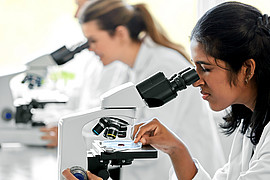
Drei Studierende arbeiten am Mikroskop in Labor Bekleidung

Biology

Explore the diversity of life and help others understand it.

  • Comprehensive School, Special Education
  • Admission free
  • Stay abroad:

    Optional

Eine Gruppe von Studierenden sitzt um einen Tisch während eines Chemie Seminars und führt Experimente durch.

Chemistry

Understand chemical concepts and explain them clearly and concisely.

  • Comprehensive School, Special Education
  • Admission free
  • Stay abroad:

    Optional

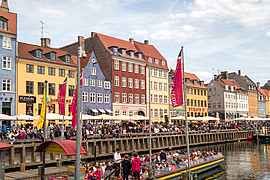
Bunte Häuser entlang der bekannten 'Nyhavn' in Kopenhagen, Dänermark.

Danish

Improve your Danish and bring the language, culture, and literature to life.

  • Primary School, Comprehensive School, Secondary School, Special Education, Vocational School: Nutrition and Domestic Science
  • Admission free
  • Entry requirements:

    Language certificate 

  • Stay abroad:

    Optional

Vier Studierende und eine Dozierende Person befinden sich in einem Proberaumund proben für ein Theaterstück.

Performing Arts

Incorporate theater, play, and aesthetic practices into creative learning processes.

  • Comprehensive School, Secondary School, Special Education
  • Admission free
  • Entry requirements:

    Aptitude test prior to application

  • Stay abroad:

    Optional

  • Name in the B.A. Educational Sciences: Performing Arts/Theatre 

Ein Stapel von Büchern steht mit einer Tasse Kaffee auf einem Wohnzimmertisch. Im Hintergrund ist eine junge Person am Lesen.

German

Opening up access to language, literature, and media.

  • Primary School, Comprehensive School, Secondary School, Special Education, Vocational School: Nutrition and Domestic Science
  • Admission free
  • Stay abroad:

    Optional

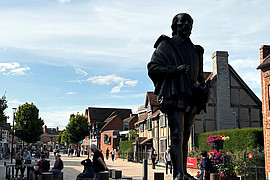
Eine Weitaufnahme einer Shakespeare Statue aus Stratford-Upon-Avon

English

Improve your English speaking skills and bring culture into the classroom.

  • Primary School, Comprehensive School, Secondary School, Special Education, Vocational School: Nutrition and Domestic Science, Vocational School: Industrial and Technical Sciences
  • Admission free
  • Entry requirements:

    Language certificate

  • Stay abroad:

    Mandatory

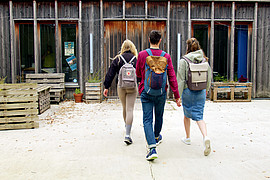
zeigt drei Studierende mit Rucksack am betreten der Campelle der Europa-Universität Flensburg

Protestant Religion

Connect questions of faith to school and society.

  • Primary School, Comprehensive School, Special Education
  • Admission free
  • Stay abroad:

    Optional

  • Name in B.A. Educational Sciences: Protestant Theology

zeigt eine Luftaufnahme mit Eiffenturm von Paris unter blauem Himmel

French

Deepen your knowledge of French and open up new horizons for language and culture.

  • Comprehensive School, Secondary School, Vocational School: Nutrition and Domestic Science
  • Admission free
  • Entry requirements:

    Language certificate

  • Stay abroad:

    Optional

zeigt Bücher und einen Globus auf einem Schreibtisch vor einer blauen Weltkarte im Hintergrund.

Geography

Explore spaces, the environment, and society through a geographical lens.

  • Comprehensive School, Special Education
  • Admission free
  • Stay abroad:

    Optional

Nahaufnahme eines kleinen Mädchens vor einem dicken Buch. Eine Braune Brille liegt auf dem Buch.

History

Explore the past and bring history to life.

  • Comprehensive School, Secondary School, Special Education, Vocational School: Nutrition and Domestic Science
  • Admission free
  • Stay abroad:

    Optional

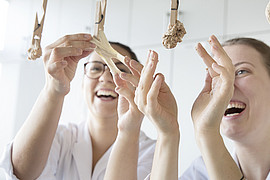
zwei lachende Studierende kochen selbstgemachte Pasta in Laborkittel in der Uni

Health and Nutrition

Incorporate health, nutrition, and life skills into your lessons.

  • Comprehensive School, Special Education
  • Admission free
  • Stay abroad:

    Optional

  • Name in B.A. Educational Sciences: Health and Nutrition

eine Gruppe studierender sitzt in der Bibliothek an einem Tisch und diskutiert

Catholic Religion

Incorporate faith, tradition, and diversity into your teaching.

  • Primary School, Comprehensive School, Special Education
  • Admission free
  • Stay abroad:

    Optional

  • Name in the B.A. Educational Sciences: Catholic Theology

zeigt zwei junge Menschen an einer Staffelei, während eines Kunst Seminars. Der vordere Arm ist leicht verschwommen und skizziert eine Figur.

Art

Develop your own aesthetic approaches and incorporate them into your teaching.

  • Primary School, Comprehensive School, Secondary School, Special Education, Vocational School: Nutrition and Domestic Science
  • Admission free
  • Entry requirements:

    Aptitude test prior application

  • Stay abroad:

    Optional

  • Name in B.A. Educational Sciences: Art and Visual Media

Eine schwarze Tafel mit Mathematischen Formeln.

Mathematics

Make mathematical concepts understandable and accessible.

  • Primary School, Comprehensive School, Secondary School, Special Education, Vocational School: Nutrition and Domestic Science, Vocational School: Industrial and Technical Sciences
  • Admission free
  • Stay abroad:

    Optional

zeigt eine Person mit rotem T-Shirt von hinten, der Gitarrenhals ist links oben zu sehen.

Music

Explore music through listening, creating, and sharing.

  • Primary School, Comprehensive School, Special Education
  • Admission free
  • Entry requirements:

    Aptitude test prior application

  • Stay abroad:

    Optional

eine gemischte Gruppe Studierender sitzt an einem Tisch und diskutiert Fachliteratur

Philosophy

Ask big questions and encourage others to think.

  • Primary School, Comprehensive School, Special Education
  • Admission free
  • Stay abroad:

    Optional

zeigt eine Lehrkraft mit drei Kindern, beim Assistieren eines Experiments in Laborkitteln und Schutzbrillen

Physics

Make physical phenomena understandable and allow students to experience them through experiments.

  • Comprehensive School, Special Education, Vocational School: Industrial and Technical Sciences
  • Admission free
  • Stay abroad:

    Optional

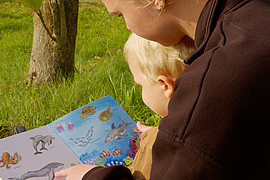
zeigt eine Studierende der Uni Flensburg vorlesend aus einem Tierbuch und einem Kind

Integrated Primary Science and Social Studies

Structure social studies lessons around children’s questions and everyday experiences.

  • Primary School, Special Education
  • Admission restricted
  • Stay abroad:

    Optional

zu sehen ist die Spanische Flagge im Wind wehend vor blauem Himmel

Spanish

Improve your Spanish and teach the language and culture with an open-minded approach.

  • Comprehensive School, Secondary School, Vocational School: Nutrition and Domestic Science
  • Admission free
  • Entry requirements:

    Language certificate

  • Stay abroad:

    Optional

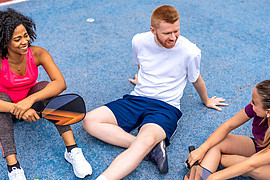
zeigt drei junge Menschen in Sport Kleidung, sie sitzen redend auf einem Sportplatz

Sports

Move people and design impactful sportseducation.

  • Primary School, Comprehensive School, Secondary School, Special Education, Vocational School: Nutrition and Domestic Science
  • Admission free
  • Entry requirements:

    Aptitute test prior application

  • Stay abroad:

    Optional

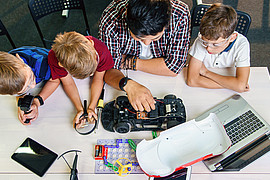
Eine Lehrkraft sitzt mit jungen Schülerinnen und Schülern an einem Tisch und erklärt Technik mit Automodell

Technology

Think about technology in practical, creative, and socially relevant ways.

  • Primary School, Comprehensive School, Special Education
  • Admission free
  • Stay abroad:

    Optional

eine junge Designerin zeichnet an einem braunen Schreibtisch an einem Modekonzept mit Bleistift

Textile Studies

Explore clothing, textiles, and fashion as culture and design.

  • Primary School, Comprehensive School, Special Education
  • Admission restricted
  • Stay abroad:

    Optional

  • Name in B.A. Educational Sciences: Textile and Fashion

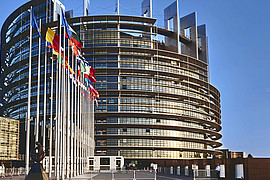
eine Weitaufnahme des Europa Parlaments, es wehen die Flaggen der EU Mitglieder in der Luft

Economy/Politics

Analyze the economy and politics and explain the connections between them.

  • Comprehensive School, Secondary School, Special Education, Vocational School: Nutrition and Domestic Science, Vocational School: Industrial and Technical Sciences
  • Admission free
  • Stay abroad:

    Optional

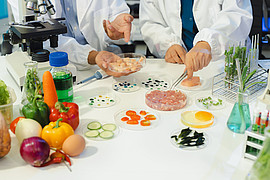
zwei Menschen führen Experimente mit Lebensmitteln durch. Auf einem Tisch stehen unterschiedliche Gemüsesorten

Nutrition and Domestic Science

Combine nutrition, home economics, and education into a multifaceted subject.

  • Vocational School: Nutrition and Domestic Science
  • Admission free
  • Stay abroad:

    Optional

  • Special features:

    Only for the Master of Vocational Education in Nutrition and Domestic Science

eine Lehrkraft macht sensorische Übungen mit  Kindern

Special Education: Intellectual Disabilities

Open up educational pathways for children with complex learning needs.

  • Special Education
  • Admission free
  • Stay abroad:

    Optional

  • Special education specialization

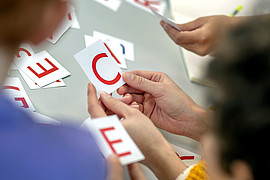
Eine Gruppe von Kindern hält verschiedene Buchstaben hoch. Im Hintergrund ist eine Lehrkraft zu sehen.

Special Education: Speech and Language Education

Strengthen language and communication as the foundation for participation.

  • Special Education
  • Admission free
  • Stay abroad:

    Optional

  • Special education specialization

eine Lehrkraft und zwei junge Schüler*innen sitzen an einem kleinen weißen Tisch und machen Aufgaben

Special Education to Promote Social and Emotional Learning

Shaping Relationships, Prevention, and Support in Everyday School Life.

  • Special Education
  • Admission free
  • Stay abroad:

    Optional

  • Special education specialization

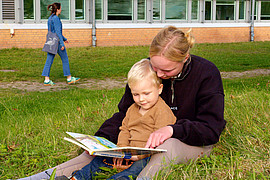
Weitaufnahme einer Lehramt Studierenden die einem Kind etwas vorliest.

Special Education: Learning Difficulties

Identify learning needs early on and provide targeted support for learning paths.

  • Special Education
  • Admission free
  • Stay abroad:

    Optional

  • Special education specialization

Oops, there are currently no subjects available for your selection. Simply adjust the filter and we will be able to show you something again.

You can find a comprehensive overview of all the modules for teacher training programs at the EUF here.

Want to study and teach more than two subjects?

Learn more

Which type of school can you teach in with your chosen subjects?

 GermanEnglishMathematicsIntegrated Primary Science 
and Social Studies
Danish    
German    
English    
Protestant Religion    
Catholic Religion    
Art    
Mathematics    
Music    
Philosophy    
Integrated Primary Science and Social Studies    
Sports    
Technology    
Textile Studies    
  BiologyChemistryProtestant ReligionGeographyNutrition and Consumer 
Education
Catholic ReligionMathematics for Lower 
Secondary Education
MusicPhilosophyPhysicsTechnologyTextile Studies
Lower Secondary EducationBiology            
Chemistry            
Protestant Religion            
Geography            
Nutrition and Consumer Education            
Catholic Religion            
Mathematics for Lower Secondary Education            
Music            
Philosophy            
Physics            
Technology            
Textile Studies            
Upper Secondary EducationDanish     Attention*      
German            
Performing Arts / Theatre            
English            
French            
History            
Art            
Mathematics for Upper Secondary Education            
Spanish            
Sports            
Economy / Politics            

* The IQSH notes that there are no probationary training positions (Referendariatsplätze) available for Danish in combination with Catholic Religion. The European University therefore advises against choosing a subject combination of Danish and Catholic Religion.

 DanishPerforming ArtsGermanEnglishFrenchHistoryArtMathematicsSpanishSportsEconomy / Politics
Danish    Attention*   Attention*  
Performing Arts           
German           
English           
FrenchAttention*          
History           
Art           
Mathematics           
SpanishAttention*          
Sports           
Economy / Politics           

* The IQSH notes that there are no probationary training positions (Referendariatsplätze) available for Danish in combination with French or Spanish. The European University therefore advises against choosing a subject combination of Danish and French or Spanish. 

Which teaching subjects (continued from the B.A. program) you can choose in the Master’s program in Special Education depends on the selected focus (primary or secondary level).

You must choose two of the following four special education specializations. These specializations must also have been completed during your B.A. studies.

  1. Special Education to Promote Social and Emotional Learning or
  2. Special Education: Intellectual Disabilities or
  3. Special Education: Learning Difficulties or
  4. Special Education: Speech and Language Education.

The subject Special Education Psychology is mandatory for all students in the Master’s programme in Special Education Teaching and does not need to be specified as part of the application process.

In addition to the two special education specialisations, you will also study an additional teaching subject.

At the primary level, the following subjects are offered:

  • Danish
  • German
  • English
  • Protestant Religion
  • Catholic Religion
  • Art
  • Mathematics
  • Music
  • Philosophy
  • Integrated Primary Science and Social Studies
  • Sports
  • Technology
  • Textile Studies


At the secondary level, the following subjects are offered: 

  • Biology
  • Chemistry
  • Danish
  • Performing Arts
  • German
  • English
  • Nutrition and Consumer Education
  • Protestant Religion
  • Geography
  • History
  • Catholic Religion
  • Art
  • Mathematics for Lower Secondary Education
  • Mathematics for Upper Secondary Education
  • Music
  • Philosophy
  • Physics
  • Sports
  • Technology
  • Textile Studies
  • Economy / Politics 

In addition to the vocational track (Nutrition and Domestic Science), students must take general education courses.

The following subjects are available:

  • Danish
  • German
  • English
  • French
  • History
  • Art
  • Mathematics
  • Spanish
  • Sports
  • Economy / Politics.

Here you’ll find everything you need to know about applying, admission, and deadlines

To the info

Course structure: Your path through the Educational Sciences degree program

1. Semester2. Semester3. Semester4. Semester5. Semester6. Semester
Bildung, Erziehung und
Gesell­schaft
Bildung, Erziehung und
Gesell­schaft
Bildung, Erziehung und
Gesell­­schaft
Bildung, Erziehung und
Gesell­schaft
Specialization phase
Your first subjectYour first subjectYour first subjectYour first subject
Your second subjectYour second subjectYour second subjectYour second subjectSemester abroad possibleBachelor­'s thesis
Orientation internshipSubject-specific internship

Want to know exactly what to expect?

When the structure of your studies may differ:

If you’re interested in special education, your schedule is predetermined:

  • You choose Special Education as subject 1, another subject as subject 2, and Bildung, Erziehung, Gesellschaft as subject 3.
  • For Special Education, you decide at the start on two of our four special education specializations. Your choices are:
    • Pädagogik und Didaktik zur Förderung der emotionalen und sozialen Entwicklung (education and teaching methods to promote social and emotional learning)
    • Pädagogik bei Beeinträchtigung der geistigen Entwicklung (education for individuals with intellectual disabilities
    • Sonderpädagogik des Lernens (special education in the field of learning)
    • Pädagogik bei Beeinträchtigung von Sprache und Kommunikation (education for individuals with speech and communication impairments)

Important: If your subject combination includes Special Education, you can only pursue teaching in special education.

Do you want to teach apprentices in food production or hospitality?

Then you should take Nutrition and Domestic Science as subject 1, a subject suitable for upper secondary level (Sekundarstufe II) as subject 2, and Berufspädagogik (vocational education) as subject 3.

Good to know: With this subject combination, you can only pursue a career in vocational school teaching.

Out into the world: Your semester abroad

If you want, you can study abroad in the fifth semester of your Educational Sciences studies.

A semester abroad is an amazing experience that can further your personal and professional development. You can choose from nearly 90 partner universities worldwide. Don’t worry — you don’t have to organize it all by yourself. Our International Center is happy to help with planning, and you can also take advantage of financial support through the Erasmus program.

Help and advice: Where to find support

Do you have questions about the subjects offered in the degree program?

Do you have general questions about studying at Europa-Universität Flensburg (EUF)? Are you unsure which degree program suits you best?

Student feedback: What graduates say about the degree program

Admission requirements: What you need to study Educational Sciences

At a glance

  • You need a higher education entrance qualification (Abitur) or a subject-specific university entrance qualification in the fields of health and social studies.
  • The additional requirements you must meet depend on the subjects you choose:
    • Some subjects have restricted admission, meaning you need a certain Abitur grade (numerus clausus, NC) to apply.
    • Other subjects have no NC.
    • It’s possible that one of your subjects has an NC while the other does not.
    • For some subjects, you may also need to submit additional documents or take tests — these are called additional qualifications.
    • Important: You must meet the requirements for all of your subjects — unfortunately, you cannot enroll in the B.A. Educational Sciences program if you only pass the selection process for one of your subjects. To be on the safe side, make sure to also apply right away for a subject combination with no admission requirements.
For those who want to know exactly what they need to do:

Check admission requirements

Teacher training in Flensburg (the Flensburg Model): Not your average teacher education degree program

If you want to teach in a school, the B.A. Educational Sciences program at EUF is the best way to start.

Here, you get more out of your studies:

  • In-depth knowledge of the subjects you’d like to teach and the skills to teach them — closely integrated
  • Practical tips for good teaching in general, sustainable Bildung and Erziehung (pedagogy, psychology, didactics, and educational sciences)
  • No stress when deciding on the type of school you’d like to teach in — you don’t have to decide until your fifth semester
  • If you decide you don’t want to become a teacher after all, you can easily pursue another master’s program
  • More freedom to combine subjects than at other universities
  • Intensive practical experience from the start: Your first school internship is in your first year, another follows mid-program, and during the master’s, you’ll spend a full semester in a school
  • Opportunity for an international experience: Discover that schools can function differently in other countries
  • We are the only university in Schleswig-Holstein where you can obtain teaching qualifications for all types of schools

What we want

Our goal is to prepare you for everything that awaits you in everyday school life. With up-to-date theoretical knowledge and practical experience, you’ll gradually learn to overcome challenges creatively and independently. We teach you all the skills you need — and always keep them current.

Understanding the school system

Did you know? A basic distinction is made between general education schools and vocational schools. Depending on the type of school you wish to teach in, your training path will be slightly different.

At EUF, you can obtain a teaching qualification for the following types of school:

With this variety, we’re unique in Schleswig-Holstein!

Any questions?

If you’re thinking that’s a lot to take in, don’t worry. Our Student Guidance and Counseling Service can help with any questions about the Bachelor of Arts in Educational Science and the Master of Education in Teaching.

Check office hours

Learn more about teacher training in Flensburg

Career prospects: What are the options after graduation?

Teaching or another career path: With a B.A. in Educational Sciences, all options are open to you. You can continue with a master’s degree in teacher education and become a teacher, or choose a non-school path and use your knowledge to start another degree program or step directly into the world of work.

Do you dream of explaining things clearly to young children and teenagers in a way they can understand? Would you like to do better than you experienced yourself at school? Or is it important for you to support young people in their development and self-discovery?

If you want to become a teacher, an exciting and varied career awaits you. One thing we can promise you: it won’t be boring. Your everyday tasks at school include:

  • Sharing your knowledge
  • Grading exams and assignments
  • Being there for students when they have questions or problems
  • Acting as a point of contact for parents and guardians
  • Organizing projects, class trips, and celebrations
  • Attending meetings and school councils

Interested? Here’s what the path to becoming a teacher looks like:

  • Complete your B.A. in Educational Sciences
  • Follow it with a Master of Education degree (M.Ed.)
  • Complete your school-based teacher training phase (Referendariat): work for 18 months at a school and gain essential practical skills
  • Once you’ve passed your final exams, you’re ready to start your teaching career
  • As a teacher, you’ll continue developing professionally throughout your career, strengthening both your subject knowledge and pedagogical skills.

More info about becoming a teacher

More info about continuing professional development

Do a master’s degree

If you know from the outset — or realize during your studies — that teaching isn’t for you, you can continue with a non-school-related master’s degree after your B.A. Look at our webpage for prospective students to see which master’s programs might interest you. A master’s qualifies you for challenging jobs that often pay well. You can also pursue a PhD after your master’s if you’re fascinated by the academic world.

Start working

Want to start your career after completing your B.A. in Educational Sciences? No problem! With the knowledge from your two subjects and the pedagogical know-how from Bildung, Erziehung, Gesellschaft, you’re qualified for many interesting jobs — especially, but not only, in the education sector.

Typical workplaces:

  • Educational institutions
  • Social organizations
  • Cultural institutions

Typical career paths:

  • You could work as a freelance teacher in an educational center, teaching young adults.
  • You could support young children and teenagers with learning difficulties in the classroom as a teaching assistant.
  • You could work as a learning coach in a tutoring organization, providing individual support to students.
  • You could manage and develop learning programs as a pedagogical staff member in an educational center.
  • You could plan and supervise projects as a staff member at a youth center.
  • You could organize and support daily operations as a staff member in a school office.

Frequently asked questions (FAQs)

A Bachelor of Arts (B.A.) is an academic degree and the first university degree. It is primarily awarded in the humanities and social sciences, for subjects such as cultural studies, linguistics, and economics. The word “arts” does not refer to art, but to the humanities and social sciences. A Bachelor of Arts qualifies you for a graduate career or entry to a master’s degree program.

Here, you’ll find a unique program that prepares you for both a career in teaching and a career outside of education. This flexibility characterizes the entire Educational Sciences degree program:

  • You can choose from a wide variety of subjects.

  • You can qualify to teach at any type of school.
  • You don’t have to decide where you want to teach until your fifth semester.
  • You’ll gain exciting knowledge about the subjects you’d like to teach as well as about fostering knowledge and cultural literacy (Bildung) and pedagogy.
  • You’ll start school-based internships early on, helping you to make informed career choices.
  • You can spend a semester abroad.

Learn more about teacher training in Flensburg:

The Flensburg Model

No, a semester abroad is optional. However, we recommend it, as it’s a chance to make new friendships, gain unique experiences, get to know another culture, and improve your language and problem-solving skills. You won’t have to organize it on your own — EUF’s International Center will support you every step of the way. And this great experience is financed through the Erasmus program.

If you decide against a semester abroad, you can simply take courses here at EUF in your fifth semester.

You need a higher education entrance qualification (Abitur) or a subject-specific higher education entrance qualification health and social sciences.

Additional requirements depend on the subjects you choose. Some subjects have a numerus clausus (NC), meaning you need a certain Abitur grade to be admitted.

Others require additional qualifications — for example, if you want to study Physical Education, you’ll have to pass a sports test.

You can check the exact requirements on the program’s application page.

No. That’s the great thing about this degree — you have all kinds of options.

You can continue on your path to become a teacher, but you can also use your knowledge to enter other professions, or deepen your knowledge by studying for a master’s degree. The B.A. in Educational Sciences is a good choice if you’re not yet sure which direction you want to go.

With so many options, it can be difficult to decide. Here are some tips:

  • Choose subjects that excite you — if you love logic and numbers, Mathematics is the right choice. If you enjoy being active and want to share that joy with young children and teenagers, choose Sports. If you love languages and travel, English could be perfect.

  • If you already know you want to teach, make sure your subject combination is suitable for the type of school you’d like to teach in.
  • If you’re unsure and want extra certainty, check if your favorite subjects are ones for which there is a shortage of teachers (Mangelfächer). You would have particularly good job prospects if you can teach such a subject. You can see what the current Mangelfächer are on the Schleswig-Holstein state website.

EUF has a rating of 4 out of 5 stars on Studycheck. 93 percent of students would recommend EUF to others.
The Educational Sciences program is rated 3.8 out of 5 stars on Studycheck, and 100 percent of respondents would recommend it.

If you have questions or issues, contact the academic advisors for your chosen subjects or the International Center.

You can also get further information from the Zentrum für Lehrer*innen-Bildung (ZfL). The ZfL handles all matters related to teacher education.

EUF is a small, friendly university in northern Germany with a green campus and many international students.

There are free language courses, a sports center, a swimming pool, and various student organizations (political, environmental, intercultural, and religious).

In the evenings, there are often themed events, such as movie and game nights, theater performances, or barbecues.

You can reach several beaches by bus, as Flensburg is located on the Flensburg Firth. The Baltic Sea, the North Sea, and Denmark are not far away. Hamburg is only two hours away by train.

Overview of all degree programs

Browse degree programs

Additional links

Accreditation