News Center
Insights into Erasmus+ funding trends
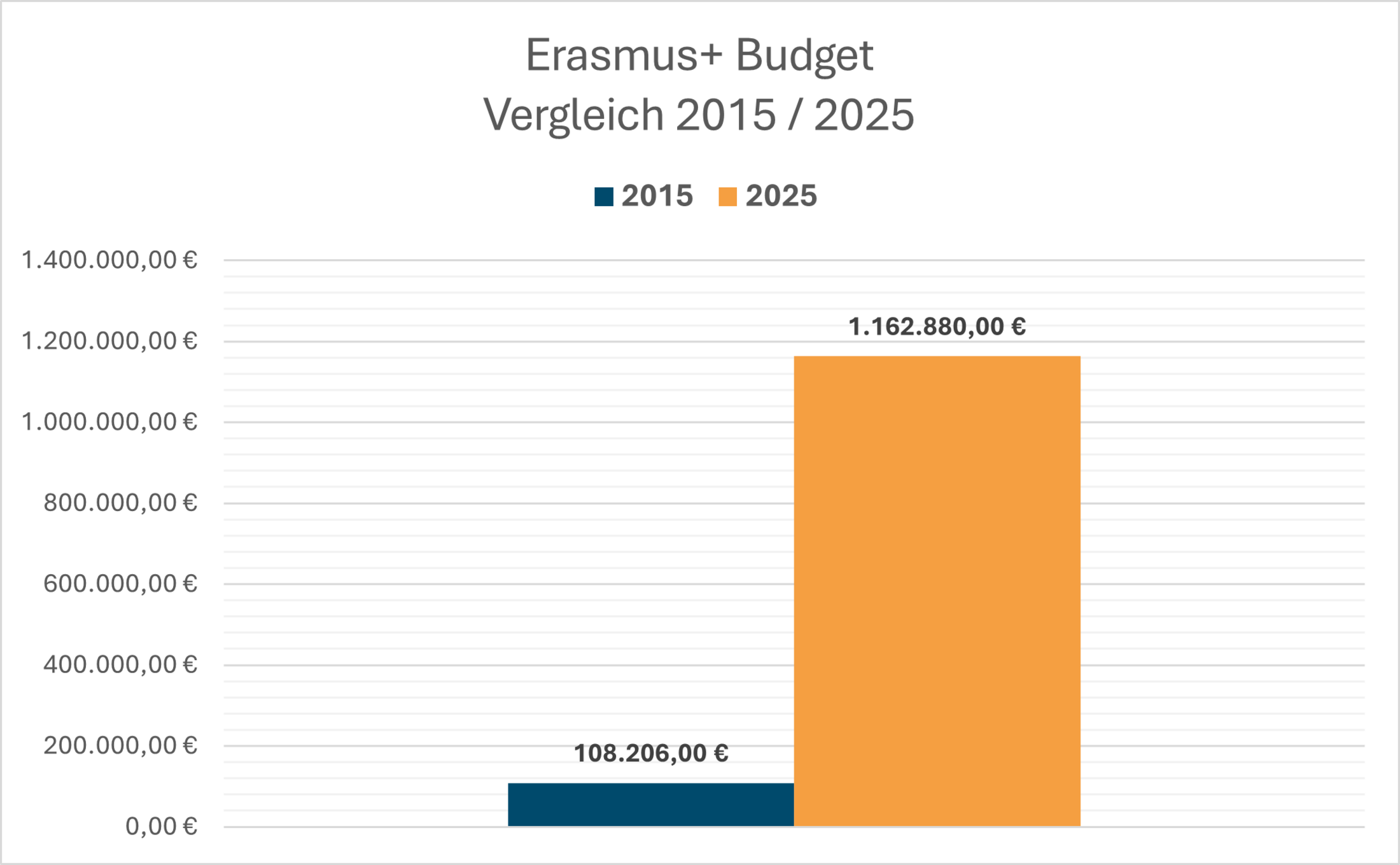
Over the past ten years, the Erasmus+ program at Europa-Universität Flensburg has been significantly expanded. Compared to 2015, the International Center was able to secure approximately ten times as much Erasmus+ funding in 2025. At the same time, the introduction of new short-term formats, such as Blended Intensive Programs (BIP) since 2023, has increased the number of participants and, among other things, led to higher funding amounts for participants with fewer opportunities.
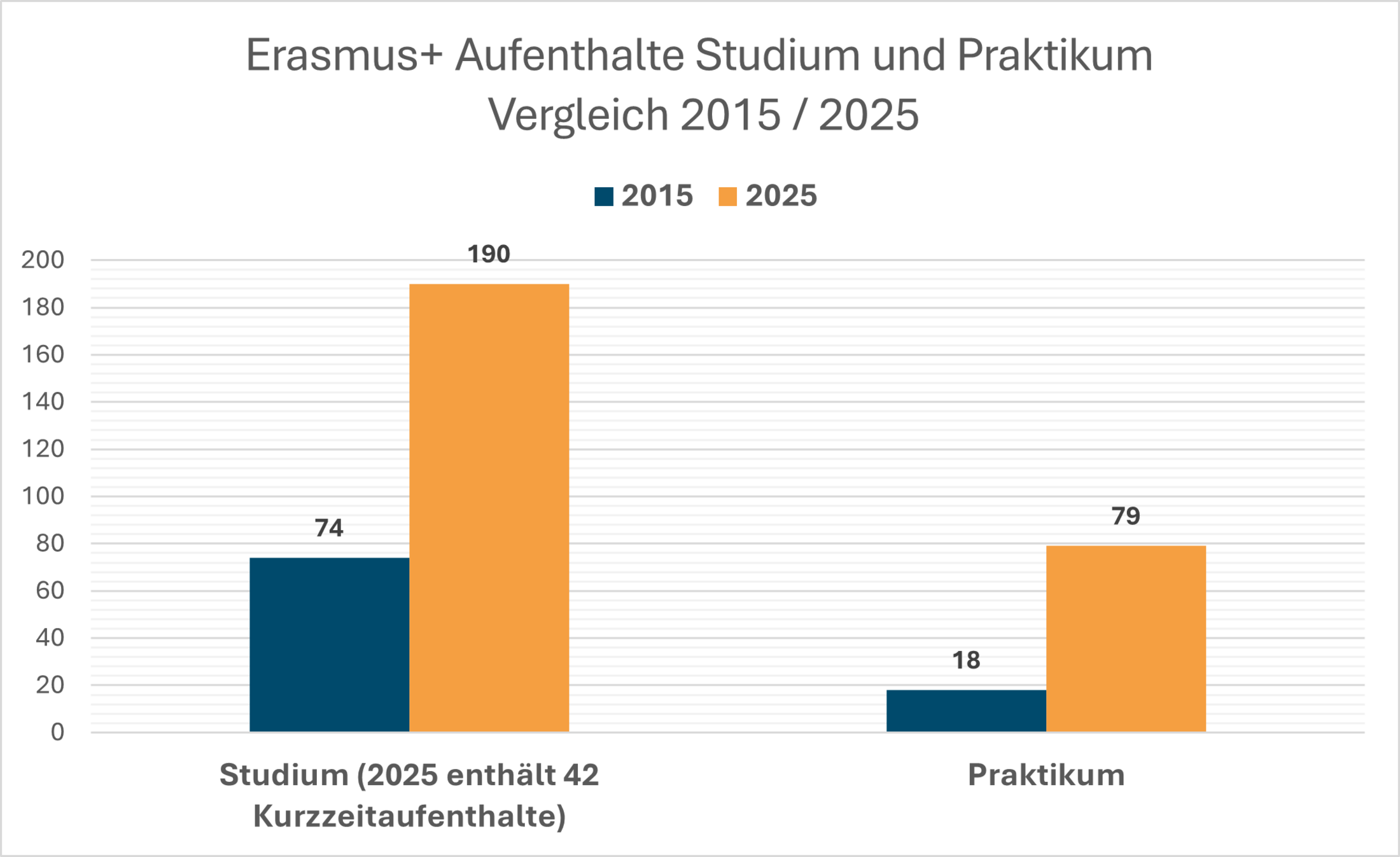
These developments open up more opportunities for the EUF to support international stays and projects, including within the framework of the European University Alliance EMERGE. The “traditional” semester abroad remains the most frequently funded form of mobility.
Of particular note is the geographical expansion: since 2023 and 2024, respectively, semesters abroad and internships have also been funded in non-European countries. In addition, since 2023, students with children, first-generation students, working students, and students with chronic illnesses or disabilities have received particularly high financial support. As a result, the average funding amount per person in 2025 was significantly higher than it was in 2015.
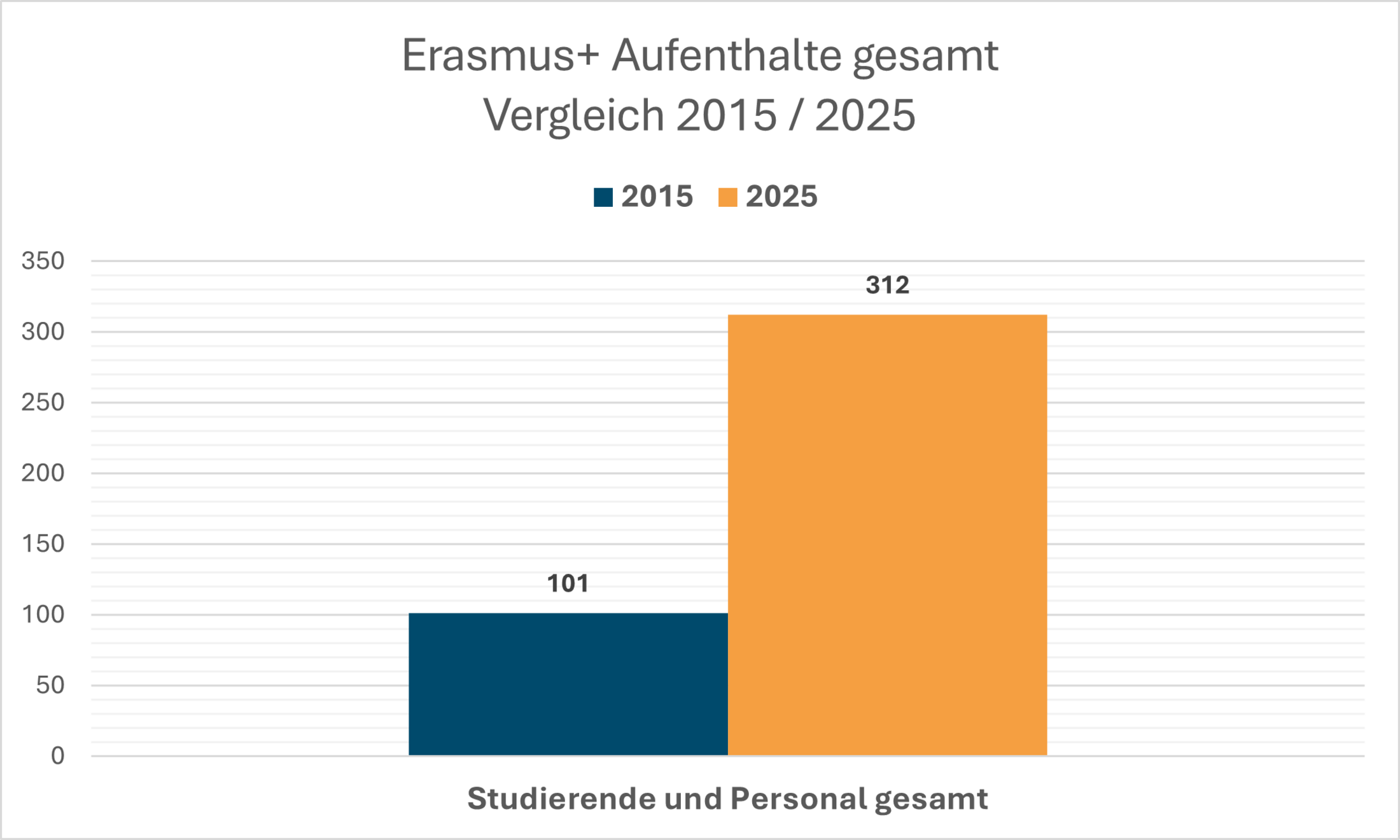
Overall, the developments of the past ten years show that Erasmus+ at the EUF has not only grown in terms of numbers but has also evolved in terms of content. Increased funding, new mobility formats, and greater consideration of diverse life situations contribute to international experiences
Overall, developments over the past ten years show that Erasmus+ at EUF has not only grown in terms of numbers but has also evolved in terms of content. Increased funding, new mobility formats, and greater consideration of different personal circumstances are helping to make international experiences accessible to significantly more people than was the case ten years ago.
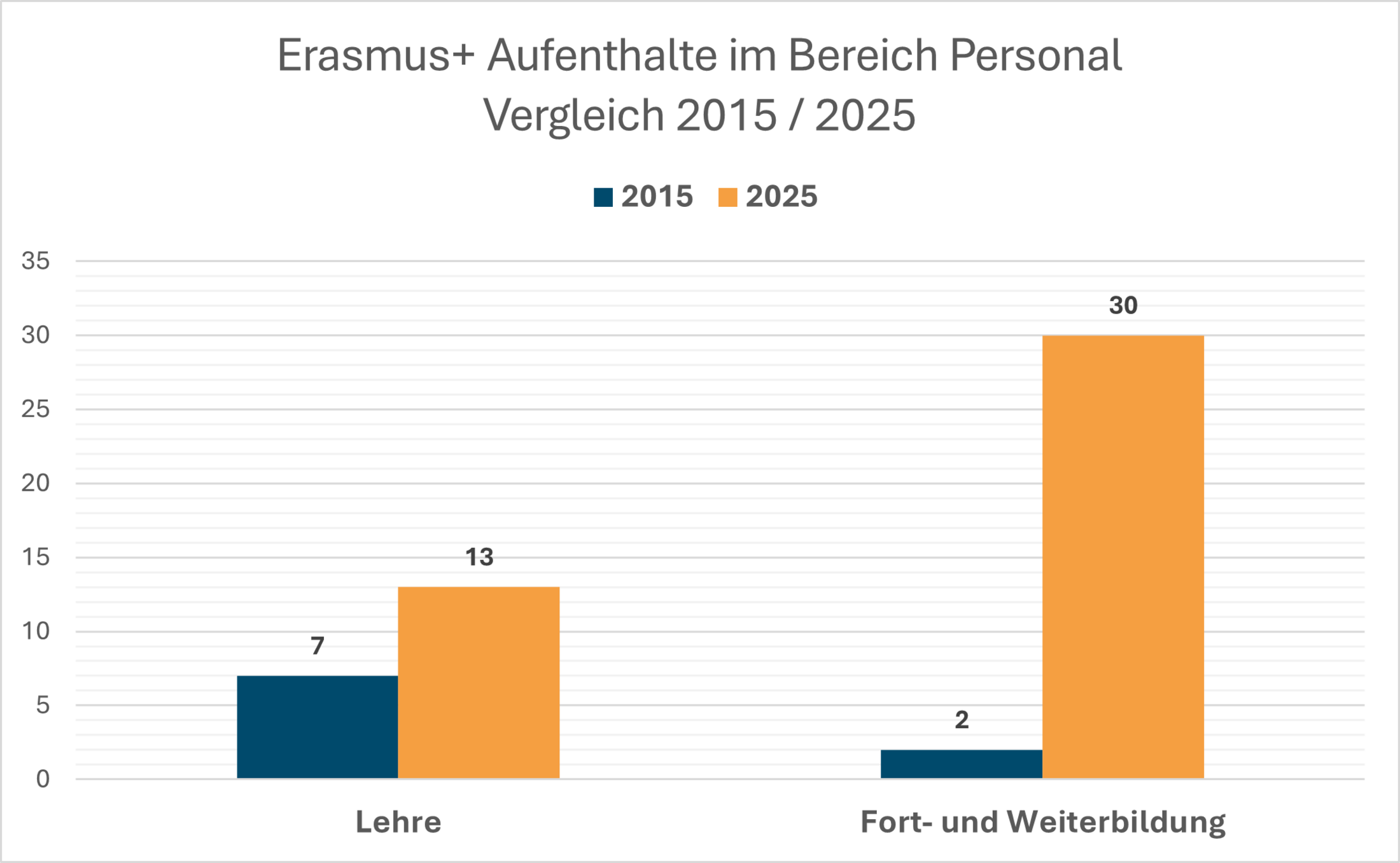
Are you working at EUF and wondering if a stay abroad might be something for you?
These colleagues already went abroad with Erasmus+:
As a professor at Europa-Universität Flensburg – and also on a personal level – it is very important to me to create opportunities for students to collaborate across national borders. More than twenty years ago, this very idea was the starting point for developing this European seminar format. Today, given the political and societal developments of recent years, European cooperation is more important than ever. With this seminar, I want to help prepare young people for a shared European future: as responsible, open-minded Europeans ready to tackle complex challenges together.
Prof. Dr. Susanne Royer (International Institute of Management and Economic Education) visited the University of Łódź as part of an Erasmus+ stay.
Participating in the Erasmus+ program is a wonderful opportunity to develop personally, make contacts, and broaden your horizons.
Dörte Kaste (Department of Finance) took a language course at Universidad Católica de Valencia.
Overall, the program offered valuable insights into how universities can enhance their research and teaching through community engagement and promote sustainability in the research and learning process. The new knowledge and network will help me continue improving our degree program and offer our students an even more engaging way of learning.
Mominul Hasan (Department of Energy & Development Cooperation/Sustainable Energy Transition) took part in a Blended Intensive Program at the University of Limerick.