Europe in the Age of Global Power Politics: The End of Normative Power, Civil Power, Soft Power?
For decades, the European Union has been described as a normative power, a civil power, and, more recently, a soft power actor. These concepts captured Europe’s distinctive role in international affairs: shaping global governance through rules, economic interdependence, diplomacy, and the promotion of values rather than military force. Yet the return of geopolitical competition, the erosion of multilateralism, and the emergence of a more fragmented international order raise fundamental questions about the continued relevance of these paradigms. Is Europe entering an era in which power politics overrides normative influence, or is the European Union adapting its traditional instruments to a more contested global environment? The Villa Vigoni Autumn School in European Studies aims to critically examine these questions through an interdisciplinary dialogue that brings together political and economic analysis, historical reflection, and legal perspectives.
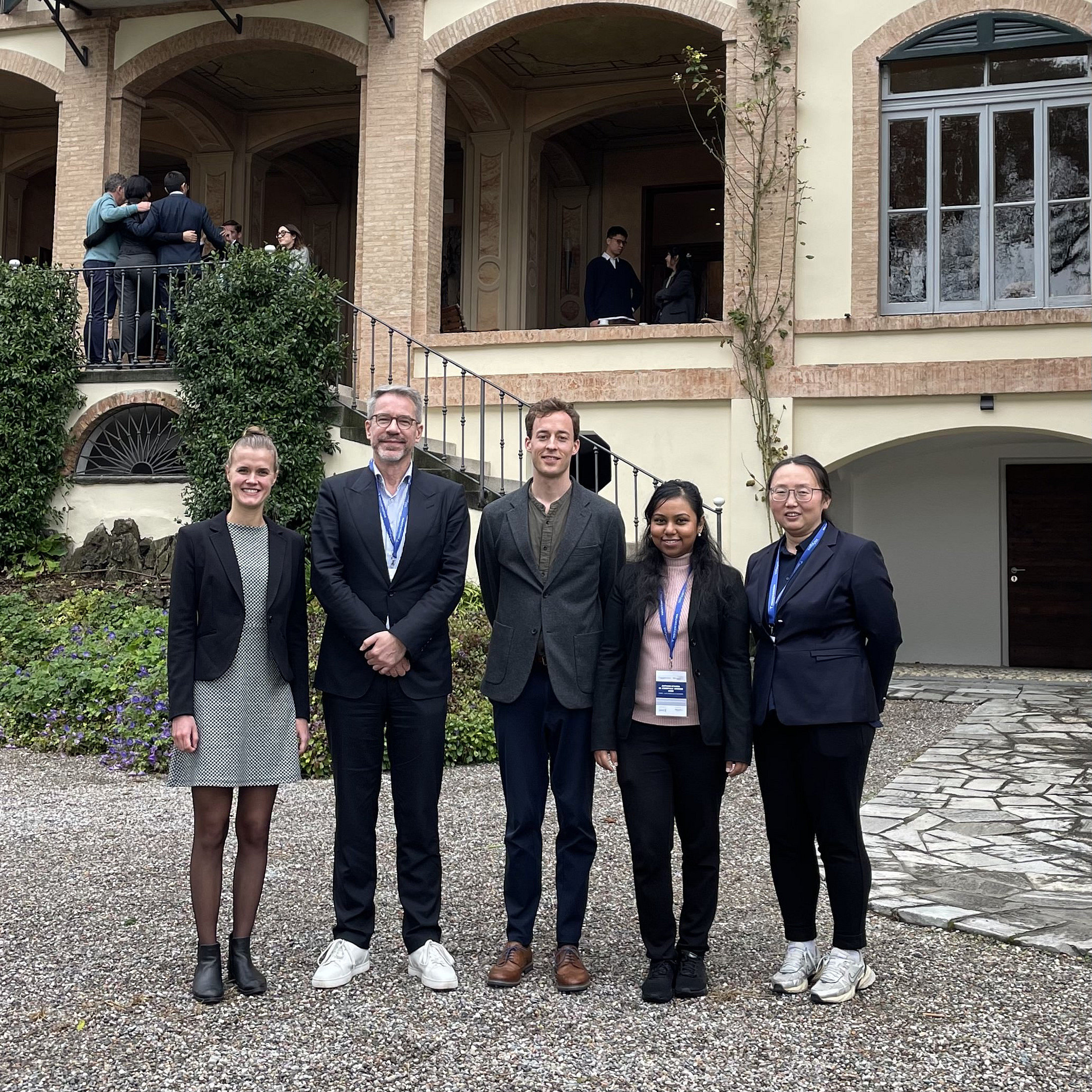
From 28 to 31 October, the third edition of the interdisciplinary Villa Vigoni Autumn School took place at Lake Como in Italy. The conference was attended by master's and doctoral students from the universities of Hamburg, Flensburg, Bologna, Bocconi (Milan), Salento, and Fudan University in Shanghai. Once again, the event was co-organised by Prof. Glassmann acting on part of Europa-Universität Flensburg. His lecture was entitled: “The Political und Economic Thought of Trumpism: why are the wealthy und the poor in the US adopting a shared ideology”. This year's Autumn School focused on the topic of 'Multilateralism in the Post-Global World'. The 43 participants were welcomed by the Italian Ambassador to China, H.E. Massimo Ambrosetti, among others. Over the course of several days, lecturers from the participating universities delivered presentations on crisis trends and coping strategies in international relations. Students from all the participating universities in Germany, Italy and China worked together in groups to reflect on what they had learnt, delivering their own presentations on the last day of the event. The photo shows the four students from the Autumn School together with Ulrich Glassmann: Ronja Pawlowski, Finn Büttner, Dilekha Hasini Weeratunga and Xiaona Tian. Please click here to access the project page
Report on participation in the 2025 Villa Vigoni Autumn School and the Treccani Culture programme in Rome by Finn Büttner
From 28 to 31 October 2025, I attended the third edition of the Villa Vigoni Autumn School at Lake Como. Villa Vigoni, the German-Italian Centre for European Dialogue, again hosted the autumn school, this year on the topic of “Multilateralism in the Post-Global World: Nations, Politics and International Relations”. The event was organised by Villa Vigoni, the Treccani Institute, Fudan University, and the universities of Hamburg, Bologna, Bocconi, Salento, and Europa-Universität Flensburg.
The autumn school offered a total of 15 lectures across four thematic panels. These addressed issues of nationhood, political order, political economy, international relations and the prospects for a new multilateralism, particularly with regard to the EU and China. Each of the organising universities brought four Master's/PhD students and several speakers to the autumn school. At the end, the participating students gave their own short presentations in small international groups, greatly enriching the intercultural exchange. Working alongside students from Fudan University offered valuable insights into the differing perceptions and experiences of European and Chinese perspectives in world politics.
Great praise is due for the organisation of the programme: the schedule, logistics and coordination of content were well thought out down to the last detail. In particular, Alberta Ivaldi contributed significantly to the event’s success with her impressive energy and overview.
Prior to this event, I had the honour of participating in a special exchange programme organised by Villa Vigoni in cooperation with the Treccani Institute. The first part of this programme, in which I had the privilege of representing Europa-Universität Flensburg, was entitled ‘Cultural Exchange Programme 2025: Europe and China’ and took place in Rome from 25 to 28 October.
Organised by Treccani Cultura — the institution behind the last European encyclopaedia still published in paper form — the four days offered an intensive programme on cultural diplomacy. Alongside students from Fudan University and young researchers from Italian and German universities, I discussed cultural foreign policy in the context of global change. The unconventional ideas presented by Prof. Trimarchi (Magna Graecia University, Catanzaro) were particularly inspiring, opening up new perspectives on the relationship between culture, politics, and history.
As well as the substantive content, highlights included two exceptional historical tours led by Nicole Greco in the Appia Antica Park and the Capitoline Museums, an insight into music theory in the world of opera, and a conversation with Paolo Petrocelli, the director of the Dubai Opera.
Participating in this programme was an incredibly enriching experience for me, both professionally and personally. I am very grateful to those at Villa Vigoni and Europa-Universität Flensburg who gave me this opportunity.
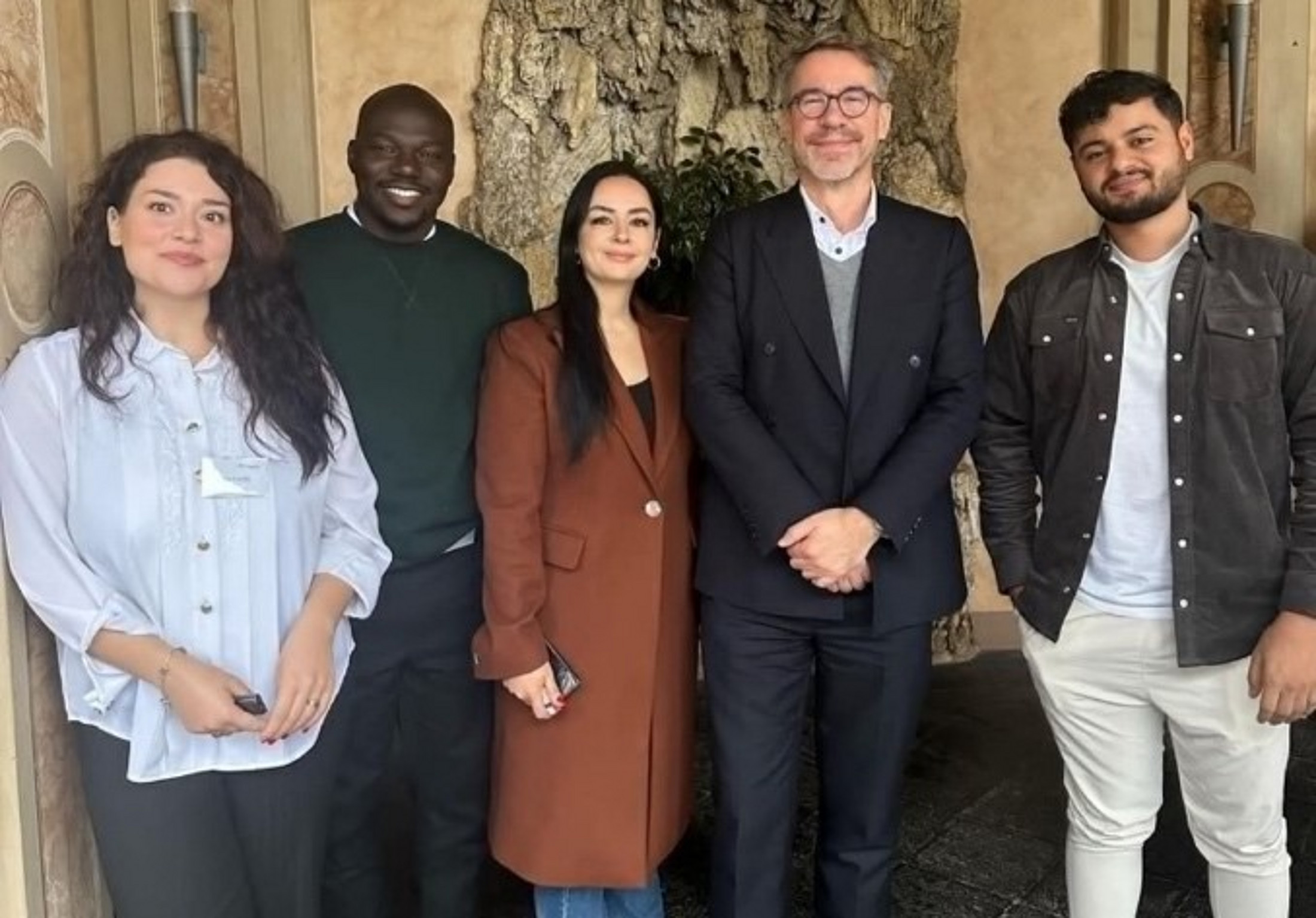
The Villa Vigoni Autumn School took place for the second time between 16 and 19 October 2024. The Autumn School is an interdisciplinary conference for the further education of Master's and doctoral students from the following disciplines History, Political Science, Sociology, Law, Economics, European Studies, organized by Prof. Glassmann on the part of EUF. At the picturesque Lake Como, where the German-Italian Centre for European Dialogue is located, a total of 33 participants, including 4 students and 2 professors from the EUF, met with students and professors from the Universities of Hamburg, Salento, Naples Federico II and Bocconi in Milan to discuss a current topic in the field of European Studies: ‘Europe and the World. Re-thinking Identity and Democracy in the Post-Global EU’.
Please click here to access the project page
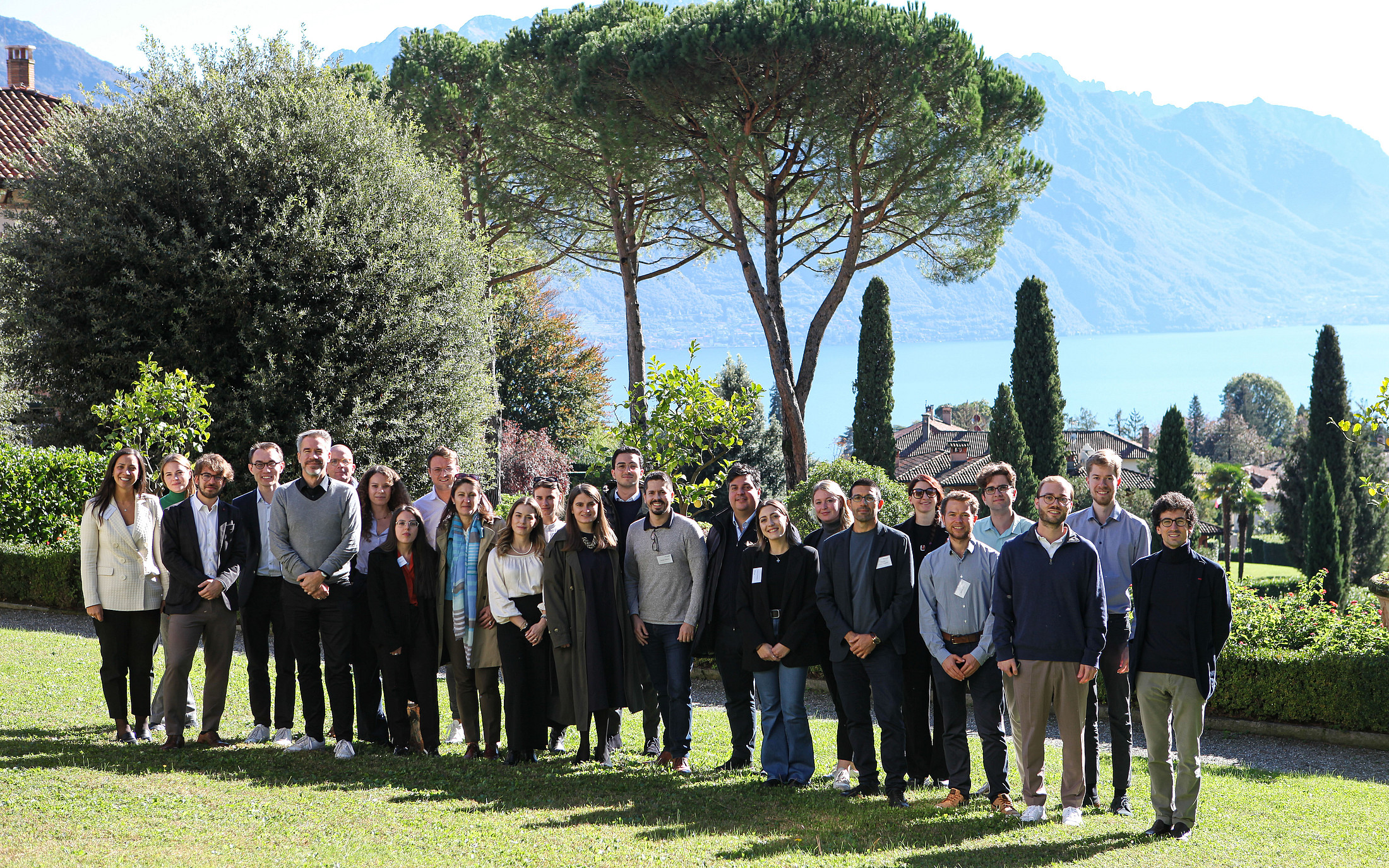
Between 25 and 28 October 2023, the Vigoni Autumn School for students and doctoral candidates of the European Studies programme at the European University of Flensburg took place for the first time. A total of 30 participants, including 5 students from the EUF and 2 professors, met at the picturesque Lake Como, home to the German-Italian Centre for European Dialogue, to engage in an exchange with students and professors from the Universities of Hamburg, Salento, Naples Federico II, and Bocconi in Milan on a current topic in the field of European Studies: ‘Which Europe after the War(s)?’ The Vigoni Autumn School was founded on the EUF side by the Vice-President for Europe and International Affairs, Prof. Dr. Ulrich Glassmann, and is part of his strategy to bring southern European partners closer to the EUF. It is also an important building block for further qualitative improvement of the programme offered to students, in order to familiarise them even more closely with the international academic discourse in European studies. To this end, the participating universities have agreed on a joint financing model with Villa Vigoni. It allows students who are selected on the basis of their motivation and performance, as with a scholarship, to participate in this multi-day conference programme while meeting and staying at the Villa.
Vice-President Prof. Glassmann, together with representatives from the other participating universities and Vigoni, has decided to continue this highly successful format in the coming year.
Please click here to access the project page