To what extent is concrete harmful to the climate – and what alternatives are there?
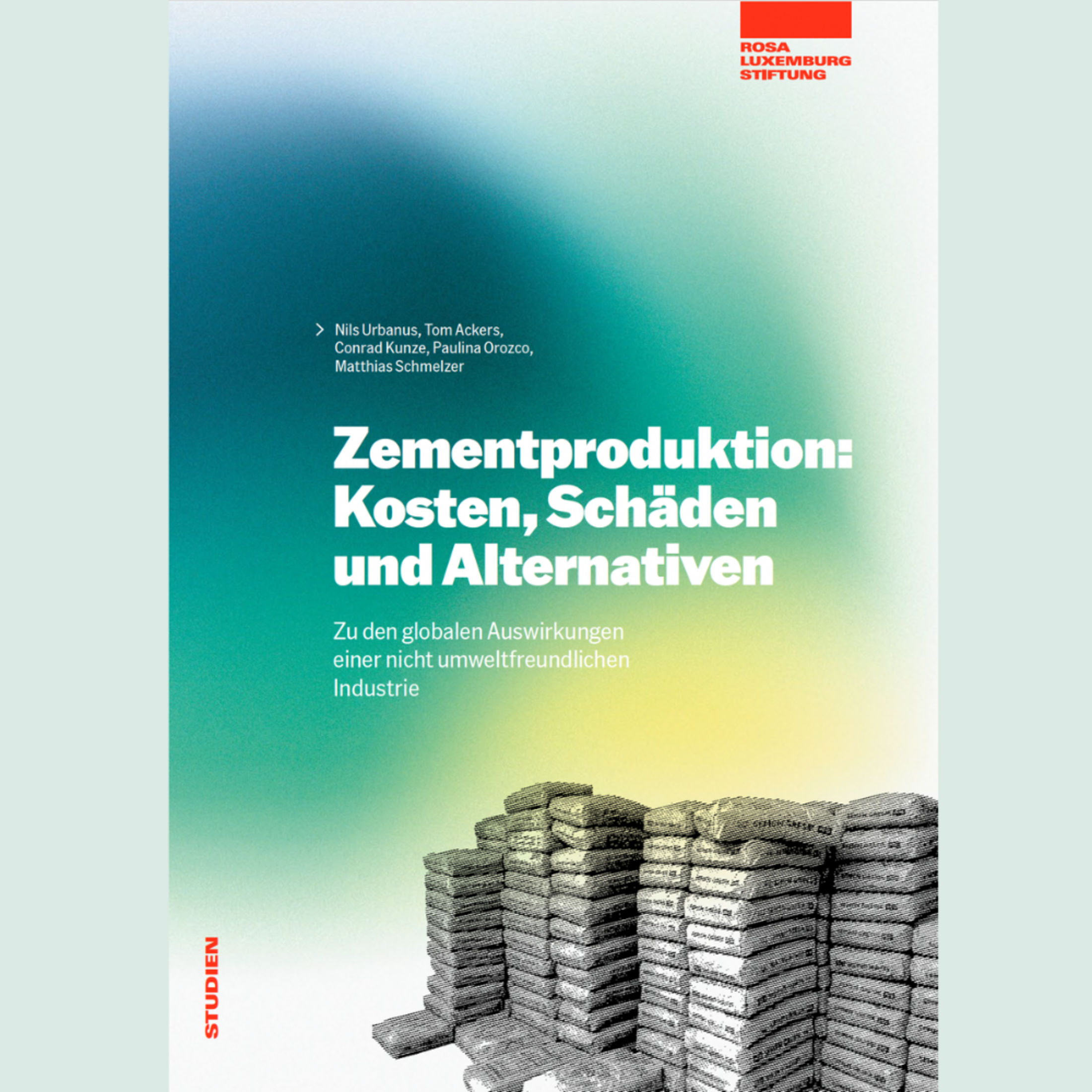
The publication of the study ‘Concrete Destruction: Costs and Damages of the Concrete and Cement Industry and the Future of Construction’, co-authored by Matthias Schmelzer, Tom Ackers, Conrad Kunze, Paulina Orozco and Nils Urbanus, will be marked by a discussion event in Berlin.
The event, entitled ‘Concrete-ified? Costs, Damage and Alternatives to Cement Production’, on 18 May 2026, will focus on the environmental and social consequences of global concrete and cement production. The study examines concrete as a building material and its impact on the climate, cities and ecosystems.
No other building material shapes our world as much as concrete. Yet its dark side is increasingly coming to light: concrete production alone accounts for eight to nine per cent of global CO2 emissions; furthermore, it contributes to the destruction of ecosystems, air pollution and the subsidence of cities, whilst producing vast amounts of waste.
A new study commissioned by the Rosa Luxemburg Foundation therefore takes a closer look at concrete as a building material. Based on the study’s key findings, we will discuss the following questions with the authors: How extensive is the damage caused by the cement industry? Can the cement industry be transformed? How can we build less and build better? And what political struggles are necessary?
The discussion will take place in English (without translation).
The event will also be livestreamed.