ViNoRHM 2.0: The North Frisian Element
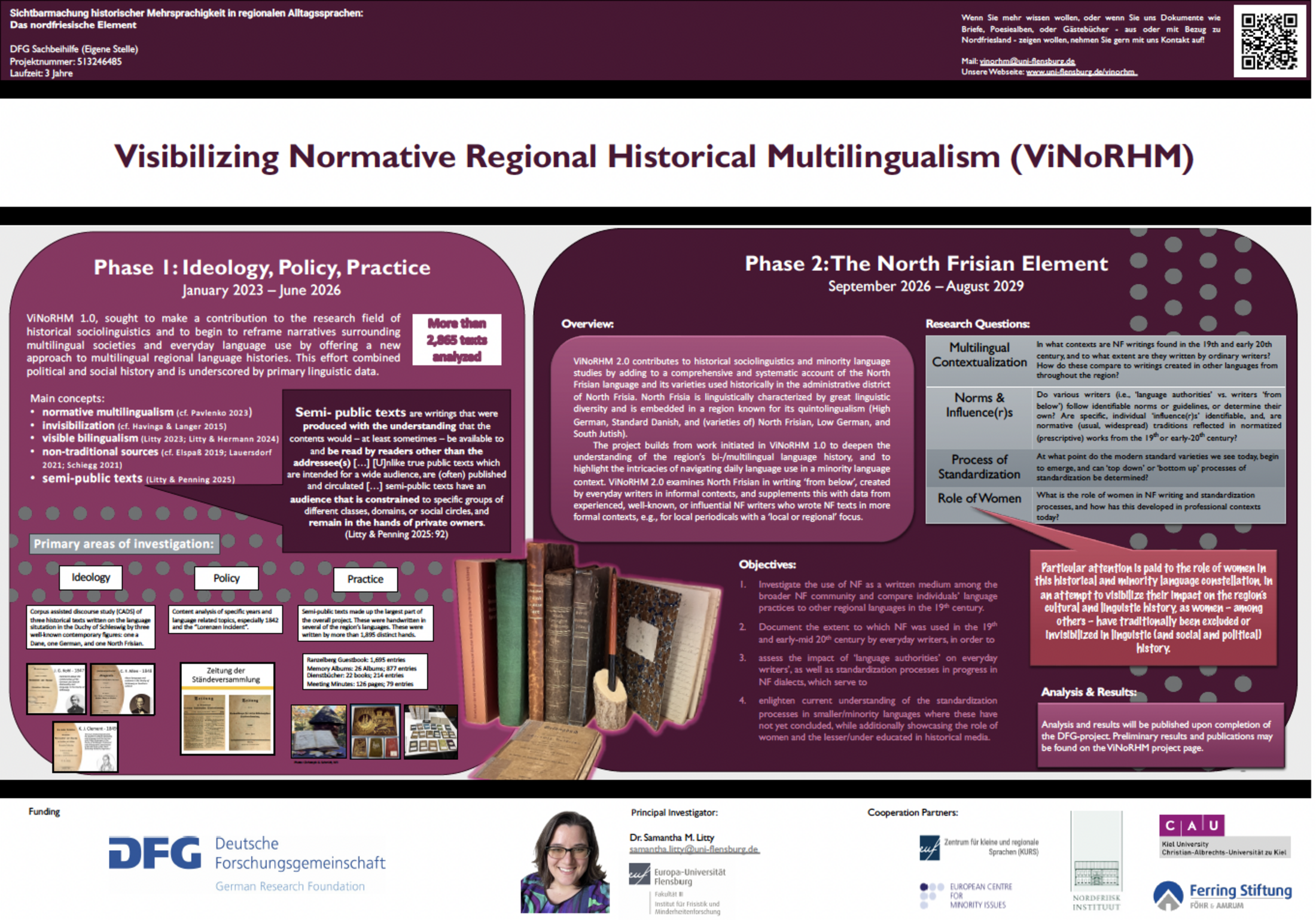
The ViNoRHM Project was extended to a second 3-year funding period, which runs from 01 September 2026 to 31 August 2029.
ViNoRHM 2.0 closes a gap in historical sociolinguistics and minority language studies by offering a comprehensive and systematic account of the North Frisian language and its varieties used historically in the administrative district of North Frisia. North Frisia is linguistically characterized by great linguistic diversity and is embedded in a region known for its quintolingualism (High German, Standard Danish, and (varieties of) North Frisian, Low German, and South Jutish).
The project builds from work initiated in ViNoRHM 1.0, which reframed narratives surrounding multilingual societies and everyday language use by offering a new approach to multilingual regional language histories that combines political and social history and is underscored by primary linguistic data. To deepen the understanding of the region’s bi-/multilingual language history, and to highlight the intricacies of navigating daily language use in a minority language context, ViNoRHM 2.0 examines North Frisian in writing ‘from below’, created by everyday writers in informal contexts, and supplements this with data from experienced, well-known, or influential NF writers who wrote NF texts in more formal contexts, e.g., for local periodicals with a ‘local or regional’ focus.
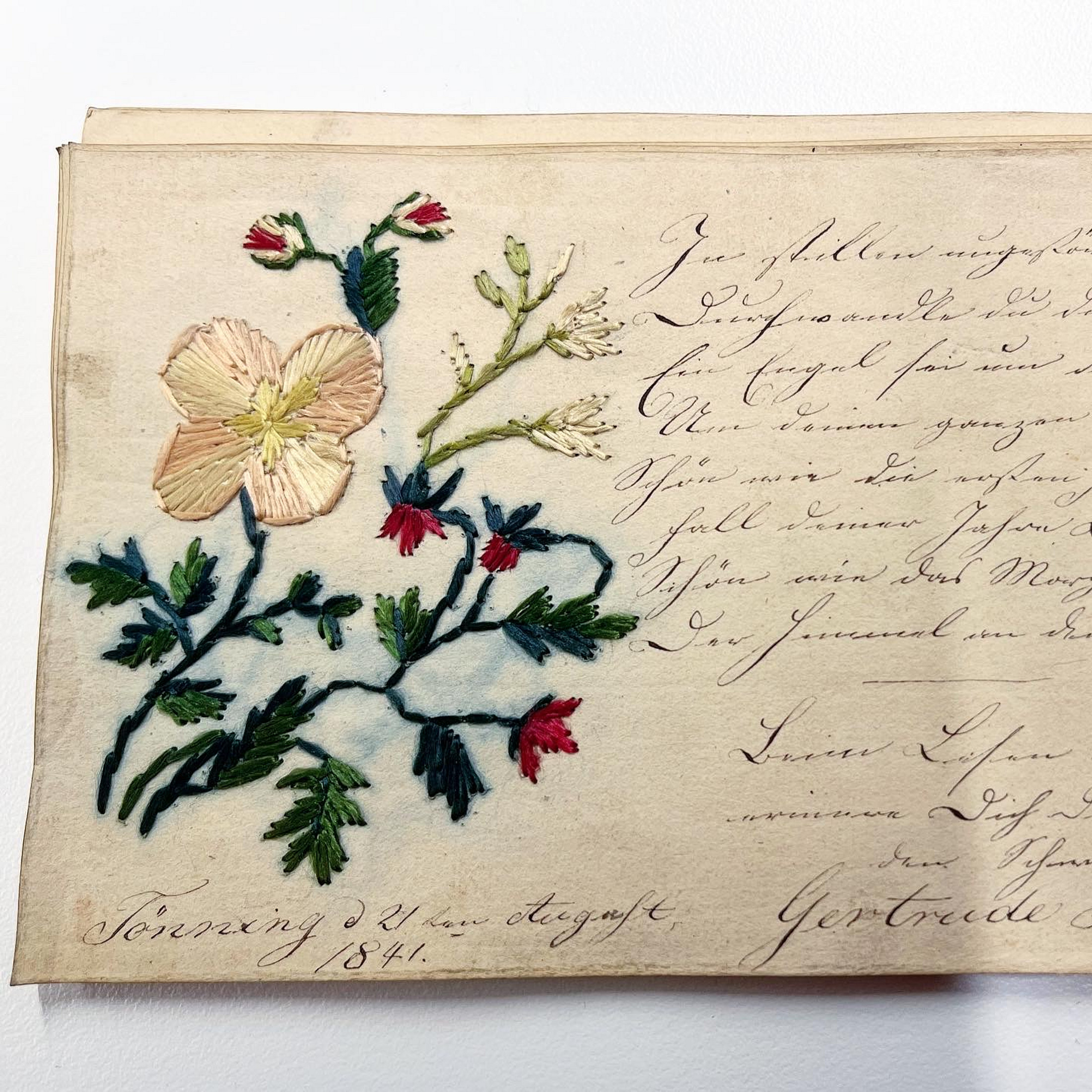
ViNoRHM 2.0 first reinterprets data collected in ViNoRHM 1.0 to contextualize NF writings in comparison to writings in neighboring languages in the 19th century, then traces the development and standardization processes that influence NF in contact with a majority language (and several additional smaller or regional varieties). By centering North Frisian writings by everyday writers from the 19th century – prior to codified norms or standardization attempts – and linking them with North Frisian writings and local/regional periodicals from the 20th century to the present, individual and community language practices are explored in a new way. Particular attention is paid to the role of women in this historical and minority language constellation, in an attempt to visibilize their impact on the region’s cultural and linguistic history, as women – among others – have traditionally been excluded or invisibilized in linguistic (and social and political) history.
ViNoRHM 2.0 also connects academic research with local and regional institutions whose primary purpose is the protection and promotion of the North Frisian language and culture. This not only supports academic pursuits, but also respects and promotes the linguistic and cultural heritage of the region and its people.
ViNoRHM 1.0: Language ideology, language policy, language practices (2023-2026)
Results and publications from the first three years can be seen here.
![[Translate to 2-Englisch:] Poster zum ViNoRHM Projekt](/fileadmin/content/_processed_/a/4/csm-vinorhm-poster-2025.02.14-4fa3134336.jpg)
The ViNoRHM project advances historical sociolinguistics by offering a comprehensive account of the languages used historically in the Duchy of Schleswig, an administratively and geographically bounded region of quintolingualism. This project combines micro-level case studies of language ideology, policy, and practice, using primary texts from official records and hitherto understudied archival data to arrive at a more cohesive and innovative account of the power dynamics in multilingual settings than has previously been attempted.
Where historiographies have historically been politically motivated, ViNoRHM crosses political and social borders to undertake the first linguistic historiography of the region based on practice and not relying on historical (ideological) or political (policy) claims. ViNoRHM not only addresses this gap by proposing new approaches to multilingual historiographies but sets a new standard for language historiographies by reframing the narrative around multilingual societies and language use, particularly as it relates to the three dimensions of this project: language ideology, language policy, and language practices.
By setting the language practices of individuals and communities as the foundation of ViNoRHM, both previously invisible or invisibilized languages and individuals (especially women and the un-/lesser educated) are brought to the forefront.
